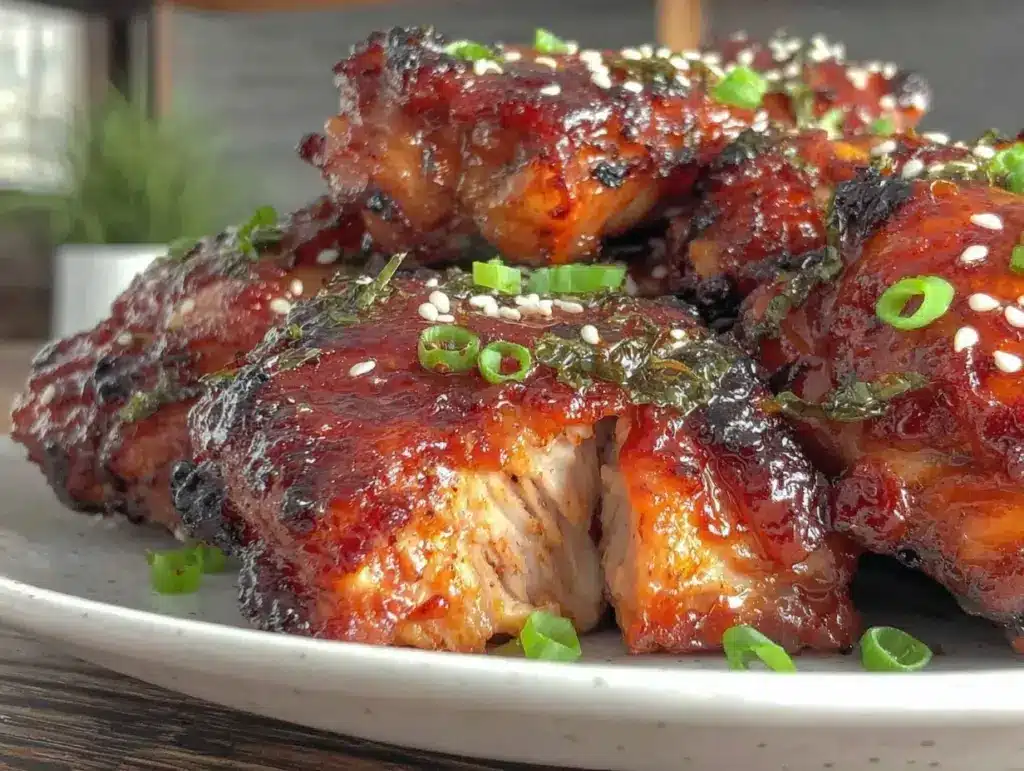
“It was 11 PM on a Tuesday, and all I could think about was something fiery and crispy,” I muttered to myself, rummaging through my fridge with a half-empty bottle of gochujang in hand. I didn’t have half the ingredients a typical recipe might call for, and honestly, I was a little too tired to make a fuss. So, I threw together some chicken thighs, a few pantry staples, and improvised a spicy glaze that ended up being the best thing I’d cooked all week. You know that feeling when a snack turns into a full meal and you’re secretly proud but also a bit surprised? Yeah, that.
Let me tell you, the way those chicken thighs crisped up in the pan, with that sticky, spicy-sweet glaze clinging to every nook and cranny — it’s the kind of dish that sticks with you. The kitchen smelled like a bustling Seoul street market, and even my skeptical cat came sniffing around for a taste. I might’ve forgotten to set a timer and ended up with a slightly more charred edge than intended (classic me), but that bite? Oh, it was magic. Maybe you’ve been there too, craving something bold and comforting, but without the fuss of a complicated recipe. This one’s for exactly those nights.
What makes this recipe stay in my regular rotation? It’s that perfect balance between crispy skin and tender, juicy meat, all wrapped in a spicy glaze that’s got just enough kick without making you reach desperately for water. Plus, it’s straightforward enough that even if your kitchen feels like a mess (guilty!), you’ll come out with something impressive and utterly satisfying every time.
Why You’ll Love This Crispy Korean Gochujang Chicken Thighs Recipe
After testing this recipe more times than I can count (and yes, sometimes burning a batch or two), I can confidently say this version of Korean gochujang chicken thighs hits every mark. I mean, who doesn’t want a recipe that’s quick, simple, and packs that authentic Korean flavor punch? Here’s why this is my go-to gochujang chicken recipe:
- Quick & Easy: Ready in under 40 minutes, perfect for busy weeknights or when you’re craving something spicy and satisfying without the wait.
- Simple Ingredients: No need for exotic grocery runs—most ingredients are pantry staples or easy to find at your local store.
- Perfect for Casual Dinners: Whether you’re cooking for one, a family meal, or impressing friends, this chicken delivers bold flavors with minimal fuss.
- Crowd-Pleaser: The balance of sweet, spicy, and umami flavors always gets rave reviews from kids and adults alike (even picky eaters).
- Unbelievably Delicious: Crispy skin, juicy thigh meat, with that glossy, sticky gochujang glaze — it’s like a bite of Seoul in your own kitchen.
This isn’t just another spicy chicken recipe. The secret lies in the marinade and the way the glaze caramelizes on the skin, creating that crave-worthy crispiness without drying out the meat. Plus, I’ve tweaked the spice level so it’s approachable but still packs a punch. Honestly, this recipe makes you close your eyes and savor every bite — it’s comfort food with a kick and soul all rolled into one.
What Ingredients You Will Need for Crispy Korean Gochujang Chicken Thighs
This recipe uses straightforward, wholesome ingredients to deliver bold, satisfying flavor with a perfect crispy texture. You probably already have most of these on hand, but if not, they’re easy to find at any well-stocked grocery store or Asian market.
- Chicken Thighs: Bone-in, skin-on (about 4 pieces, 1.5 lbs / 700 g) – the skin is the star for crispiness and juicy meat underneath.
- Gochujang: 3 tablespoons – this Korean chili paste is the heart of the spicy glaze; I prefer Chung Jung One brand for its balanced flavor.
- Soy Sauce: 2 tablespoons – adds savory depth and saltiness.
- Rice Vinegar: 1 tablespoon – for a hint of tang that brightens the glaze.
- Honey or Brown Sugar: 1 tablespoon – balances heat with sweetness (honey gives a nice sticky texture).
- Garlic: 3 cloves, minced – essential aromatic punch.
- Ginger: 1 teaspoon, grated – adds warmth and complexity.
- Sesame Oil: 1 teaspoon – a few drops go a long way to add that toasted nuttiness.
- Vegetable Oil: For frying – neutral oil with high smoke point like canola or grapeseed.
- Optional Garnishes: Toasted sesame seeds, sliced green onions – for crunch and freshness.
Ingredient tips: Look for firm chicken thighs with intact skin for the best crisp. If you can’t find gochujang, mix 1 teaspoon of chili paste with a tablespoon of miso as a substitute, but the authentic flavor won’t be quite the same. For a gluten-free version, use tamari instead of soy sauce. Also, fresh garlic and ginger make a noticeable difference – pre-minced is fine in a pinch, but fresh is best.
Equipment Needed
- Heavy Skillet or Cast Iron Pan: Ideal for even heat distribution and crisping the chicken skin perfectly.
- Tongs: For flipping the chicken without tearing the skin.
- Measuring Spoons: To keep the glaze flavors balanced.
- Mixing Bowl: For combining the glaze ingredients and marinating.
- Paper Towels: To pat the chicken dry – key for crispy skin.
- Optional: Wire rack and baking sheet if you prefer oven-finished chicken (I’ve tried both methods).
If you don’t have a cast iron pan, a heavy-bottomed stainless steel skillet works well. Just avoid nonstick pans for the searing step, as you want to build a nice crust. For budget-friendly options, any sturdy frying pan you own is fine, just watch the heat carefully. Also, I’ve learned the hard way that drying the chicken thoroughly with paper towels before cooking makes a huge difference — don’t skip it!
Preparation Method for Crispy Korean Gochujang Chicken Thighs
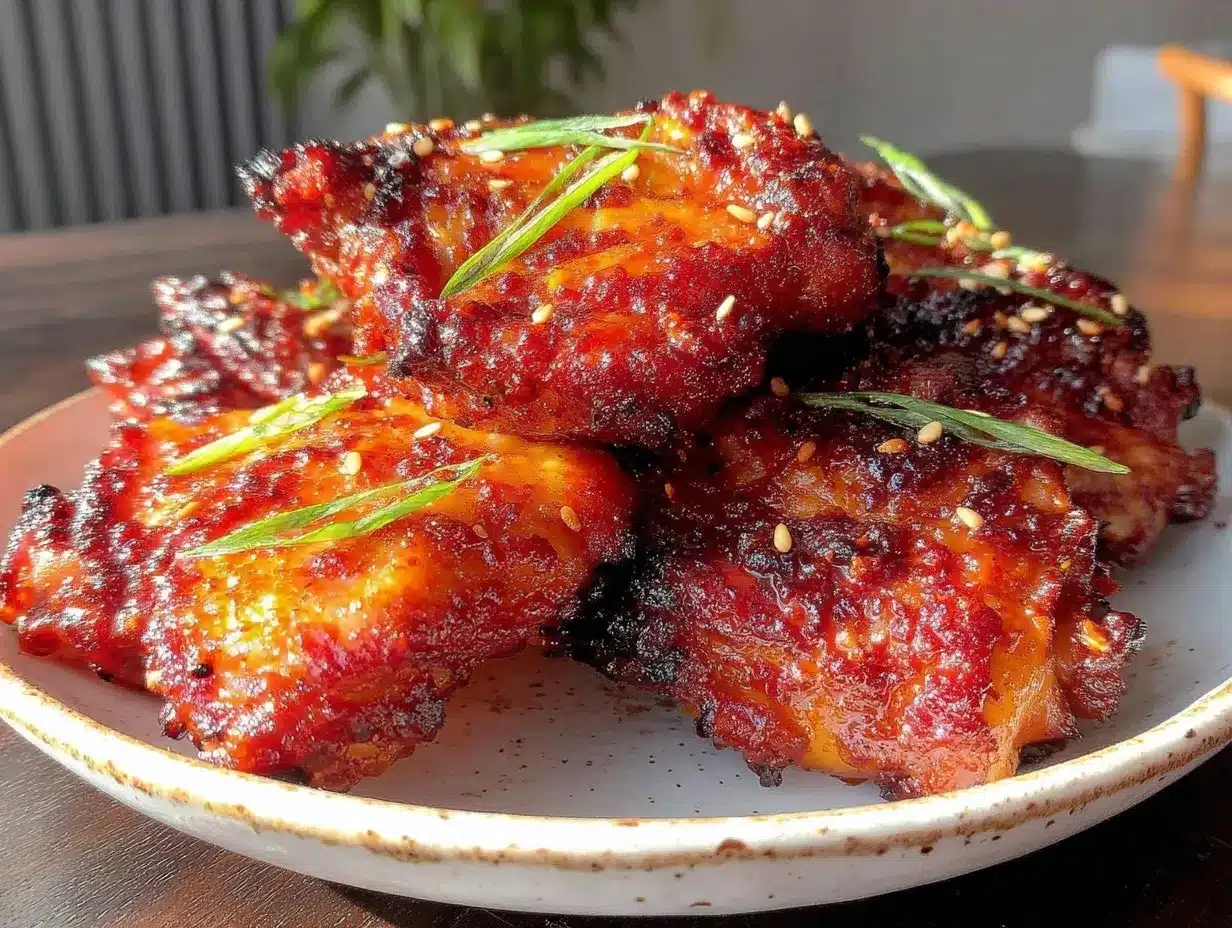
- Prep the chicken: Pat the chicken thighs dry with paper towels (this is crucial to get crispy skin). Season lightly with salt and pepper on both sides. Let rest while you mix the glaze – about 10 minutes.
- Make the spicy glaze: In a mixing bowl, whisk together 3 tbsp gochujang, 2 tbsp soy sauce, 1 tbsp rice vinegar, 1 tbsp honey (or brown sugar), minced garlic, grated ginger, and 1 tsp sesame oil until smooth and well combined. Set aside.
- Heat the skillet: Place a large cast iron or heavy skillet over medium-high heat and add 2 tbsp vegetable oil. Let it get hot but not smoking – you should see a slight shimmer on the surface.
- Cook the chicken skin-side down: Carefully place the chicken thighs skin-side down in the hot oil. Press down lightly with a spatula or tongs to ensure even contact with the pan. Cook undisturbed for 7-9 minutes until the skin is golden brown and crispy. (If it’s browning too fast, lower heat slightly.)
- Flip and cook the other side: Turn the chicken over and cook for an additional 5-7 minutes. The internal temperature should reach 165°F (74°C). If you have a meat thermometer, use it here for accuracy.
- Glaze the chicken: Lower the heat to medium-low. Pour the spicy glaze over the chicken thighs in the pan, carefully spooning it over each piece. Cook for 2-3 more minutes, turning chicken occasionally to coat it evenly in the sticky, caramelizing sauce.
- Finish and rest: Remove chicken from the pan and let rest for 5 minutes. This helps the juices redistribute and keeps the meat juicy.
- Garnish and serve: Sprinkle with toasted sesame seeds and sliced green onions for a fresh crunch and nutty aroma. Serve immediately.
Pro tip: If your glaze thickens too much or starts to burn, add a splash of water or soy sauce to loosen it up. The glaze should be sticky and shiny, not bitter. Also, don’t overcrowd the pan when searing; work in batches if needed for even cooking.
Cooking Tips & Techniques for Crispy Korean Gochujang Chicken Thighs
Getting that perfect crisp on chicken thighs while locking in juicy tenderness can be tricky, but here’s what I’ve learned through trial and error (and a few kitchen mishaps):
- Dry the skin thoroughly: Moisture is the enemy of crispiness. Pat the chicken dry with paper towels before seasoning.
- Don’t rush the skin-side cooking: Let the chicken sit undisturbed on medium-high heat so the skin can render fat and crisp up properly.
- Use a heavy skillet: Cast iron is best for even heat and that coveted crust. Nonstick pans won’t give you the same sear.
- Control the heat: Too hot and the skin burns; too low and it stays rubbery. Adjust as you go.
- Marinate briefly: The glaze ingredients work best with a short marination (15-20 minutes) or you can brush it on near the end for freshness.
- Glaze near the end: Adding the spicy glaze too early can cause burning due to the sugar content. Wait until the chicken is nearly cooked before glazing.
- Rest the meat: Always rest cooked chicken to keep it juicy and tender.
I once tried glazing the chicken right at the start and ended up with a burnt mess, so trust me — patience with the glaze pays off. Also, multitasking tip: while the chicken cooks, you can prep your garnishes or steam some rice to serve alongside. It’s all about timing and flow in the kitchen.
Variations & Adaptations
Feel like switching things up? Here are a few ways I’ve played around with this recipe that you might want to try:
- Spicy Level Adjustments: Add more gochujang or a dash of Korean chili flakes (gochugaru) for heat lovers, or reduce the paste for a milder flavor.
- Gluten-Free: Swap soy sauce with tamari or coconut aminos for a gluten-free glaze without sacrificing umami.
- Oven-Baked Version: After searing skin-side down on the stove, finish the chicken in a preheated 400°F (200°C) oven for 10-12 minutes; glaze as usual.
- Low-Carb Option: Use a sugar substitute like erythritol or monk fruit sweetener instead of honey.
- Personal Twist: I once added a splash of orange juice to the glaze for a citrusy zing that cuts through the heat beautifully.
These tweaks keep the recipe fresh and let you tailor it to your taste or dietary needs. Honestly, once you get the base down, it’s fun to experiment!
Serving & Storage Suggestions
Serve these crispy Korean gochujang chicken thighs hot, straight from the pan, with a side of steamed jasmine rice or crispy lettuce wraps for a fresh contrast. I like to add a simple cucumber salad or kimchi on the side to balance the richness and spice. A cold beer or lightly sweetened iced tea pairs nicely with the flavors.
For storage, let the chicken cool completely, then place in an airtight container. It keeps well in the fridge for up to 3 days. When reheating, gently warm in a skillet over medium heat to bring back some crispiness rather than microwaving (which makes the skin soggy). Leftovers also freeze well — thaw overnight in the fridge before reheating.
Flavors tend to deepen after a day, so if you can resist the temptation, leftovers can be even better the next day. Just don’t forget to re-crisp that skin!
Nutritional Information & Benefits
This recipe offers a satisfying balance of protein and bold flavors without being heavy. Each serving (one chicken thigh with glaze) roughly provides:
| Calories | 320 kcal |
|---|---|
| Protein | 28 g |
| Fat | 18 g |
| Carbohydrates | 8 g |
| Sugar | 5 g |
Chicken thighs provide rich protein and iron, while gochujang brings fermented probiotics and antioxidants from chili peppers. Using moderate honey adds natural sweetness but keep it balanced. This dish is naturally gluten-free if you choose the right soy sauce alternatives. Just watch the sodium if you’re sensitive.
From a wellness perspective, this recipe hits the spot when you want something nourishing but full-flavored — it’s comfort food that doesn’t leave you feeling weighed down.
Conclusion
If you’re after a recipe that’s straightforward, packed with authentic Korean flavors, and offers that addictive crispy skin with a spicy-sweet glaze, these crispy Korean gochujang chicken thighs are your new best friend. You can personalize the heat and sides to suit your mood, and the quick prep means it won’t hold you hostage in the kitchen.
Honestly, I keep coming back to this recipe because it feels like a little celebration on a plate every time. Give it a try, tweak it your way, and don’t be shy to share how you made it your own. I’d love to hear your stories, any twists you tried, or questions you have. Cooking should be fun, and this recipe proves you don’t need to be a pro to make something truly satisfying. So go on — get crispy, get spicy, and enjoy every bite!
Frequently Asked Questions About Crispy Korean Gochujang Chicken Thighs
Can I use chicken breasts instead of thighs?
You can, but chicken breasts tend to dry out faster and won’t get as crispy as thighs with skin. If using breasts, consider cooking them a bit more gently and watch the timing closely.
How spicy is this recipe?
It has a moderate heat level thanks to the gochujang, which is spicy but balanced by sweet honey and savory soy sauce. You can adjust by adding more or less gochujang or including chili flakes if you want extra kick.
Can I make this recipe ahead of time?
Yes! You can marinate the chicken up to 24 hours in advance (covered in the fridge). When ready, just cook as directed. Leftovers also reheat well.
What if I don’t have gochujang?
Gochujang is key for the authentic flavor, but in a pinch, mix a teaspoon of chili paste with a bit of miso paste to mimic that sweet-spicy umami. It won’t be the same, but still tasty.
How do I get the chicken skin extra crispy?
Pat the skin very dry, don’t overcrowd the pan, and cook skin-side down first without moving the chicken. Using a cast iron skillet helps a lot, too. Avoid flipping too often!
Pin This Recipe!
Crispy Korean Gochujang Chicken Thighs

A quick and easy recipe for crispy, juicy chicken thighs coated in a spicy-sweet gochujang glaze, delivering authentic Korean flavors with minimal fuss.
- Prep Time: 15 minutes
- Cook Time: 20 minutes
- Total Time: 35 minutes
- Yield: 4 servings 1x
- Category: Main Course
- Cuisine: Korean
Ingredients
- 4 bone-in, skin-on chicken thighs (about 1.5 lbs / 700 g)
- 3 tablespoons gochujang (Korean chili paste)
- 2 tablespoons soy sauce
- 1 tablespoon rice vinegar
- 1 tablespoon honey or brown sugar
- 3 cloves garlic, minced
- 1 teaspoon grated ginger
- 1 teaspoon sesame oil
- 2 tablespoons vegetable oil (canola or grapeseed) for frying
- Optional garnishes: toasted sesame seeds, sliced green onions
Instructions
- Pat the chicken thighs dry with paper towels. Season lightly with salt and pepper on both sides. Let rest for about 10 minutes.
- In a mixing bowl, whisk together gochujang, soy sauce, rice vinegar, honey (or brown sugar), minced garlic, grated ginger, and sesame oil until smooth and well combined. Set aside.
- Heat a large cast iron or heavy skillet over medium-high heat and add vegetable oil. Heat until shimmering but not smoking.
- Place chicken thighs skin-side down in the hot oil. Press lightly with a spatula or tongs to ensure even contact. Cook undisturbed for 7-9 minutes until skin is golden brown and crispy. Lower heat if browning too fast.
- Flip the chicken and cook for an additional 5-7 minutes until internal temperature reaches 165°F (74°C).
- Lower heat to medium-low. Pour the spicy glaze over the chicken thighs, spooning it over each piece. Cook for 2-3 minutes, turning occasionally to coat evenly in the sticky glaze.
- Remove chicken from the pan and let rest for 5 minutes to redistribute juices.
- Garnish with toasted sesame seeds and sliced green onions. Serve immediately.
Notes
Patting the chicken dry is crucial for crispy skin. Avoid overcrowding the pan and cook skin-side down undisturbed for best results. Glaze near the end to prevent burning. If glaze thickens too much, add a splash of water or soy sauce to loosen it.
Nutrition
- Serving Size: One chicken thigh wi
- Calories: 320
- Sugar: 5
- Fat: 18
- Carbohydrates: 8
- Protein: 28
Keywords: Korean chicken, gochujang chicken, crispy chicken thighs, spicy chicken, easy Korean recipe, weeknight dinner