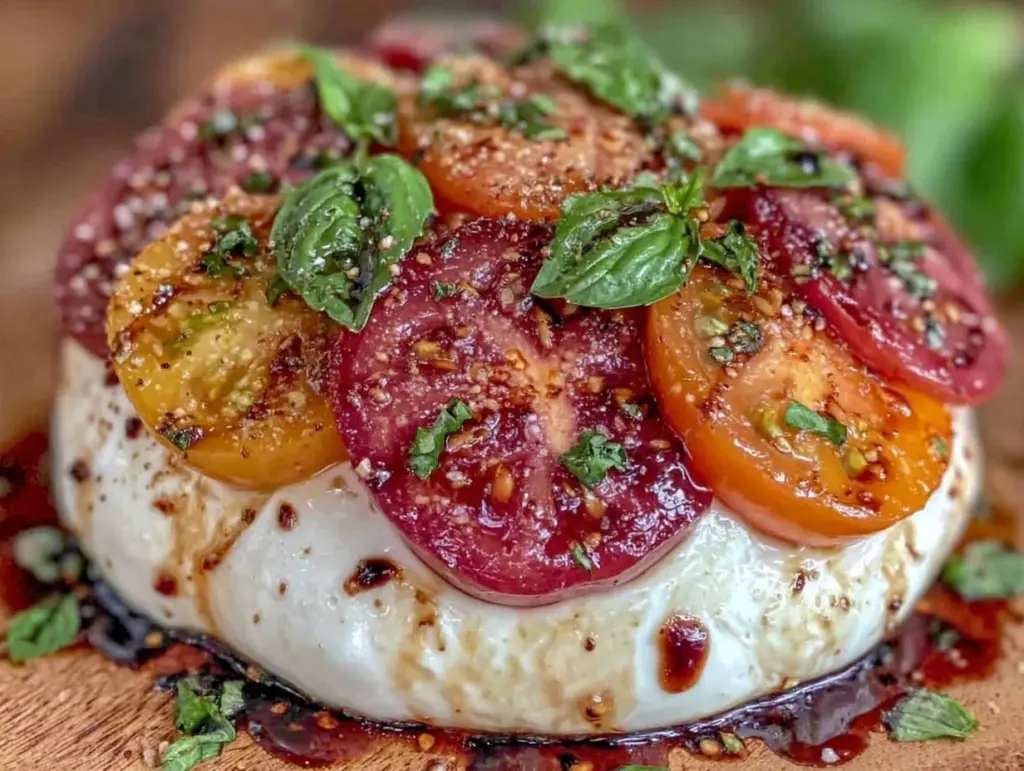
“You sure this works?” my partner asked, glancing skeptically at my humble bowl of curdled milk. Honestly, I was just trying to save a few bucks on fancy cheese that week, but the idea of making fresh homemade mozzarella burrata had somehow taken hold after a late-night scroll through a rustic Italian food forum.
The kitchen was warm, the smell of simmering whey mingling with the faint scent of basil from the windowsill. That afternoon, I was chasing simplicity—something quick and comforting after a day that refused to slow down. I didn’t expect much, just a creamy cheese to pair with the heirloom tomatoes I’d been hoarding in the fridge. But the moment I sliced into that delicate burrata and saw the creamy center spill out like a soft cloud, I knew I had stumbled onto something special.
This fresh homemade mozzarella burrata with heirloom tomato caprese quickly became my go-to, especially when I needed food that felt like a gentle hug. It’s not just about the ingredients or the technique—it’s a little pause, a fresh bite of summer, and a reminder that sometimes the best meals come from the most unexpected kitchen experiments. And, well, it turns out, making burrata at home isn’t as daunting as I feared. It’s actually kind of fun—like a secret you’re happy to share.
Since then, this recipe has quietly held a spot in my weekly rotation, a testament to how simple ingredients can surprise you. What’s better, it pairs beautifully with other fresh dishes like my cucumber dill salad—and honestly, it’s a crowd-pleaser that feels fancy without the fuss.
So, if you ever wondered if making fresh cheese at home was too much trouble—let me tell you, this burrata and heirloom tomato caprese might just be the easy, delicious answer you didn’t know you needed.
Why You’ll Love This Fresh Homemade Mozzarella Burrata Caprese Recipe
Over the months, I’ve refined this recipe through trial and error (and lots of tasting). Here’s why it’s become a staple for me and why I think you’ll adore it too:
- Quick & Easy: You can whip up the burrata and assemble the caprese in under an hour—perfect for those evenings when you want something impressive but don’t have all day.
- Simple Ingredients: No need for specialty stores. Most ingredients are pantry staples or easy to find at any grocery store, especially when heirloom tomatoes are in season.
- Perfect for Entertaining: Whether it’s a casual dinner or a small gathering, this dish feels special enough to impress without stressing you out.
- Crowd-Pleaser: Even my pickiest eaters couldn’t stop raving about the creamy burrata paired with juicy, vibrant tomatoes.
- Unbelievably Delicious: The texture of fresh mozzarella with its creamy center, combined with ripe heirloom tomatoes and fragrant basil, is pure magic.
What sets this recipe apart is the homemade burrata itself. Instead of buying something mass-produced, you get to enjoy cheese that’s as fresh as it gets—soft, milky, and bursting with flavor. The technique of forming the burrata with a creamy filling inside is surprisingly straightforward once you get the hang of it, and it delivers a texture that store-bought versions just can’t match.
This isn’t just another caprese salad; it’s a fresh take that feels indulgent without being heavy. Plus, making the cheese at home adds a layer of satisfaction you won’t find anywhere else. It’s perfect for those moments when you want to slow down and savor something truly delightful.
What Ingredients You Will Need
This recipe keeps things simple but relies on quality ingredients to shine. You’ll find most items are pantry staples or fresh produce that you likely have on hand.
- For the Burrata:
- Whole milk (1 gallon / 3.8 liters) – Use fresh, not ultra-pasteurized for best results
- Heavy cream (1 cup / 240 ml) – adds richness to the creamy center
- Citric acid (1 ½ teaspoons) – dissolves in ¼ cup water; helps curdle the milk
- Liquid rennet (¼ teaspoon) – diluted in ¼ cup water; essential for curd formation
- Non-iodized salt (1 teaspoon) – enhances flavor, avoid iodized to prevent bitterness
- For the Heirloom Tomato Caprese:
- Heirloom tomatoes (3-4 medium, assorted colors) – ripe and fragrant
- Fresh basil leaves (1 cup) – pick vibrant, unwilted leaves
- Extra virgin olive oil (3 tablespoons) – choose a robust, fruity brand
- Balsamic reduction or glaze (optional, 1 tablespoon) – adds sweet tang
- Freshly ground black pepper (to taste)
When selecting your heirloom tomatoes, I like to look for firm yet juicy ones that have a deep color and aroma—this really lifts the dish. For the milk, I’ve found that using local, organic milk makes a noticeable difference in creaminess and flavor. If you want a dairy-free twist, you might want to check out my dairy-free recipes for inspiration, but for this burrata, whole milk and cream are key.
Equipment Needed
Making fresh mozzarella burrata isn’t as gear-heavy as you might think, but a few tools will make your life easier:
- Large stainless steel pot: For heating the milk evenly without scorching. I prefer thick-bottomed pots for better heat distribution.
- Thermometer: Crucial for monitoring milk temperature precisely—too hot or cold, and the curds won’t form right.
- Slotted spoon or skimmer: To gently lift curds without breaking them.
- Large bowl: For collecting whey and holding curds.
- Microwave-safe bowl or double boiler: To heat and stretch curds (microwave is faster, but a double boiler gives you more control).
- Cheesecloth (optional): Useful if you want to drain whey more efficiently.
- Small mixing bowls: For diluting citric acid and rennet.
If you don’t have a thermometer, a quick test is to heat the milk until it’s warm but not hot to touch (about 90°F/32°C for citric acid addition, then up to 105°F/40°C for rennet). But honestly, investing in a reliable kitchen thermometer is a game-changer for all kinds of cooking.
Preparation Method
- Prepare your ingredients: Dissolve 1 ½ teaspoons of citric acid in ¼ cup cold water, and dilute ¼ teaspoon liquid rennet in another ¼ cup of water. Set aside.
- Heat the milk: Pour 1 gallon (3.8 liters) of whole milk into your large pot. Slowly heat over medium heat, stirring gently to prevent scorching, until the milk reaches 90°F (32°C).
- Add citric acid: Stir in the dissolved citric acid evenly. This acidifies the milk and helps curd formation. Continue heating until the milk reaches 105°F (40°C).
- Add rennet: Stir in the diluted rennet gently but thoroughly. Stop stirring and allow the milk to sit undisturbed for 5 minutes. It will form a gel-like consistency. If it’s still liquid after 5 minutes, give it a gentle stir and wait another 2-3 minutes.
- Cut and cook the curds: Once set, cut the curd into 1-inch cubes using a long knife. Slowly heat the curds to 110°F (43°C) over 5 minutes, stirring gently to keep curds separate.
- Drain the whey: Using your slotted spoon, transfer curds into a bowl, leaving whey behind. You can save whey for baking or discard it.
- Heat and stretch curds: Microwave the curds on high for 1 minute, then drain excess whey. Fold and stretch the cheese with hands (wear gloves if hot), microwave again for 35 seconds, repeat stretching until smooth and elastic.
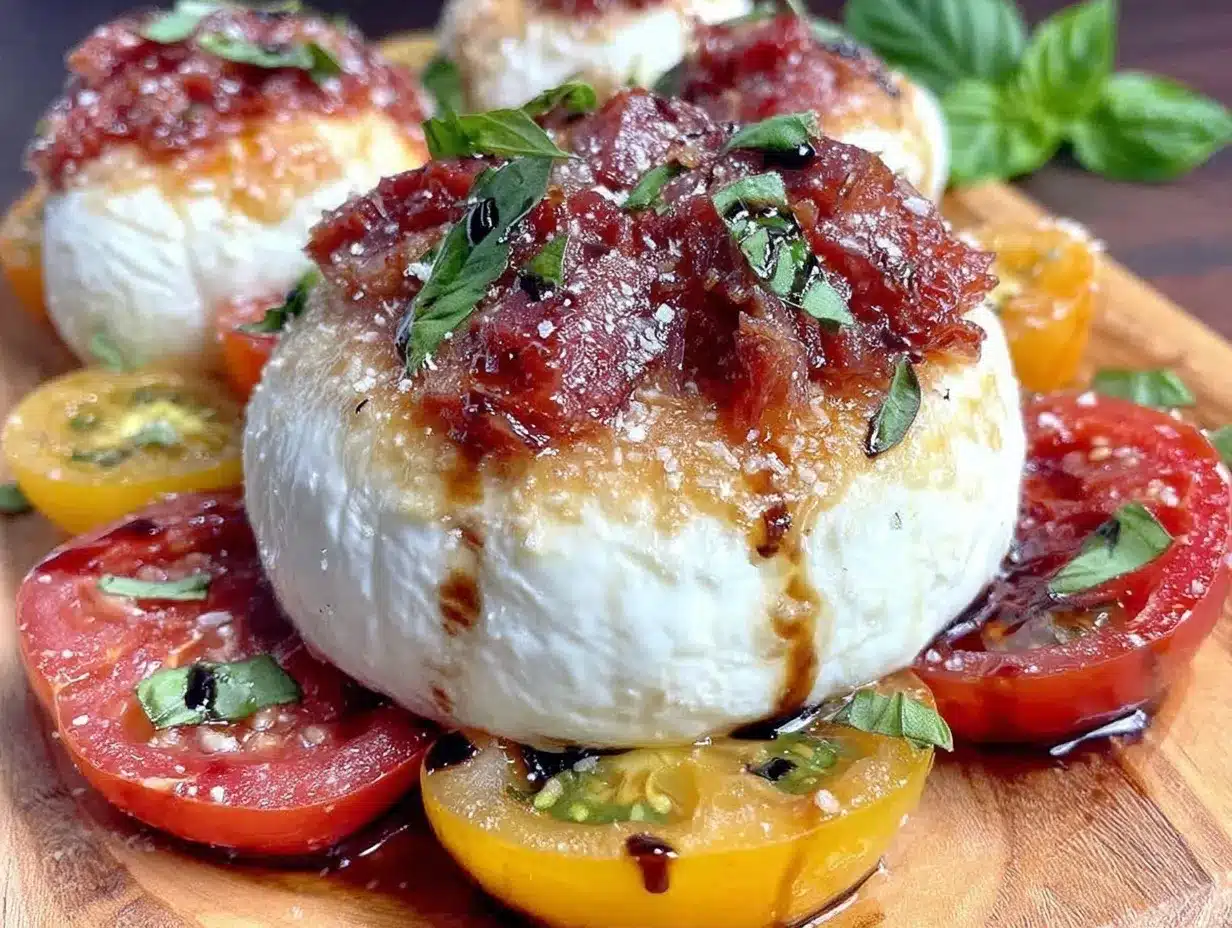
- Form burrata bags: Take a portion of stretched mozzarella, flatten it, add a spoonful of heavy cream in the center, and fold edges to seal, creating a pouch.
- Chill and rest: Place burrata balls in cold water for 10 minutes, then drain and sprinkle with salt.
- Assemble caprese: Slice heirloom tomatoes into thick rounds, arrange on a plate. Tear fresh basil and scatter over tomatoes, place burrata balls on top. Drizzle with olive oil, add cracked black pepper, and a drizzle of balsamic glaze if using.
Timing-wise, you’re looking at roughly 45-60 minutes total, but it feels quicker once you get into the rhythm. If the curds feel tough or dry, it usually means they were overheated—keep an eye on temps and don’t rush the stretching phase.
Cooking Tips & Techniques
From my experiences (and a few kitchen mishaps), here are some pointers to get this recipe just right:
- Milk quality matters: Fresh, high-fat milk makes a huge difference in texture. Ultra-pasteurized milk often won’t form curds properly.
- Temperature control is key: Use a good thermometer and don’t rush heating. Too hot, and curds get rubbery; too cold, and they won’t set.
- Stretch gently: When heating and stretching the curd, use gentle motions. Overstretching or overheating can cause the cheese to lose moisture and become tough.
- Don’t skip the cream filling: The cream inside the burrata gives that signature luscious texture—feel free to adjust the amount depending on how rich you like it.
- Prep your assembly ingredients ahead: Slice your heirloom tomatoes and have basil ready so you can plate immediately, preserving freshness and color.
- Multitasking: While the curds are setting or resting, prep your caprese components or make a balsamic reduction to save time.
I once tried skipping the warming step before stretching, and the cheese was crumbly—not fun. After a few tries, I learned that patience and attention to heat make all the difference.
Variations & Adaptations
This recipe is pretty flexible and invites a few tasty twists:
- Herb-infused burrata: Mix chopped fresh herbs like thyme or chives into the cream filling for a fragrant surprise.
- Vegan twist: While traditional burrata is dairy-based, you can experiment with cashew cream fillings and plant-based mozzarella alternatives for a dairy-free caprese.
- Seasonal spins: Swap heirloom tomatoes with ripe peaches or roasted beets for a different but equally fresh flavor profile.
- Grilled burrata: For a smoky note, briefly grill the formed burrata balls before assembling the caprese.
- Spicy drizzle: Add a few drops of chili-infused olive oil or sprinkle crushed red pepper flakes on the caprese for a subtle kick.
Personally, I once tried adding a bit of lemon zest to the cream filling—unexpected but lovely. It brightened the cheese in a way that paired beautifully with the sweeter heirlooms.
Serving & Storage Suggestions
Fresh homemade mozzarella burrata with heirloom tomato caprese is best served immediately while the cheese is soft and the tomatoes are juicy. Serve at room temperature to let the flavors shine.
- Garnish with extra basil leaves and a drizzle of good-quality olive oil right before serving.
- Pair it with crusty bread or a light white wine like Pinot Grigio or Sauvignon Blanc.
- For storage, keep the burrata balls submerged in a little whey or salted water in an airtight container in the fridge for up to 2 days.
- Tomatoes are best fresh; slice just before serving to avoid sogginess.
- If reheating burrata, do so gently in a warm water bath or microwave for just a few seconds—too much heat will ruin the texture.
Flavors meld beautifully if the burrata is made a few hours ahead, but the fresh basil and tomato crispness are at their best when assembled just before eating. This dish pairs nicely alongside grilled items like the grilled corn with chili lime butter or the herb butter glazed beer can chicken for a full summer feast.
Nutritional Information & Benefits
Fresh homemade mozzarella burrata is a delicious source of high-quality protein and calcium, thanks to the fresh dairy content. Paired with heirloom tomatoes, which are rich in antioxidants like lycopene and vitamins A and C, this dish offers a balanced nutritional profile.
A rough estimate per serving (one burrata ball with tomato slices):
| Calories | 250-300 kcal |
|---|---|
| Protein | 15-18 g |
| Fat | 18-22 g (mostly from dairy fat and olive oil) |
| Carbohydrates | 4-6 g |
| Calcium | Over 20% DV |
This recipe is naturally gluten-free and low in carbohydrates, making it suitable for various dietary preferences. Just be mindful of allergies related to dairy. The fresh ingredients support a wholesome, minimally processed eating style, which I always appreciate when cooking for myself or guests.
Conclusion
Making fresh homemade mozzarella burrata with heirloom tomato caprese is more than just a recipe—it’s a small celebration of simple ingredients coming together in a way that tastes like summer on a plate. Whether you’re feeding friends or treating yourself to a quiet night in, this dish holds that little spark of joy that only fresh food can bring.
Don’t hesitate to play around with the cream filling or swap heirlooms for other seasonal produce. I love how this recipe invites creativity and always rewards with a comforting, creamy bite.
If you give this a try, I’d be thrilled to hear how it went or what twists you’ve made—sharing these moments makes cooking feel even more special.
Enjoy every creamy, vibrant mouthful!
Frequently Asked Questions
Can I use store-bought mozzarella instead of making burrata from scratch?
Absolutely! While fresh homemade burrata has a unique texture, you can use fresh mozzarella balls and add a spoonful of cream or mascarpone inside for a similar effect.
How do I know when the curds are ready to stretch?
The curds should be firm but elastic and pull apart easily when heated. If they’re too soft or crumbly, they might need more heating or gentle stretching.
Can I prepare burrata ahead of time?
Yes, you can make burrata a few hours in advance and keep it chilled in salted water. Assemble the caprese just before serving for the freshest presentation.
What’s the best way to store leftover burrata?
Store burrata submerged in whey or salted water in an airtight container in the fridge. Consume within 2 days for the best taste and texture.
Are heirloom tomatoes necessary for this recipe?
Heirloom tomatoes add vibrant color and flavor, but you can use any ripe, juicy tomato variety you prefer. Just avoid underripe or mealy tomatoes for best results.
Pin This Recipe!
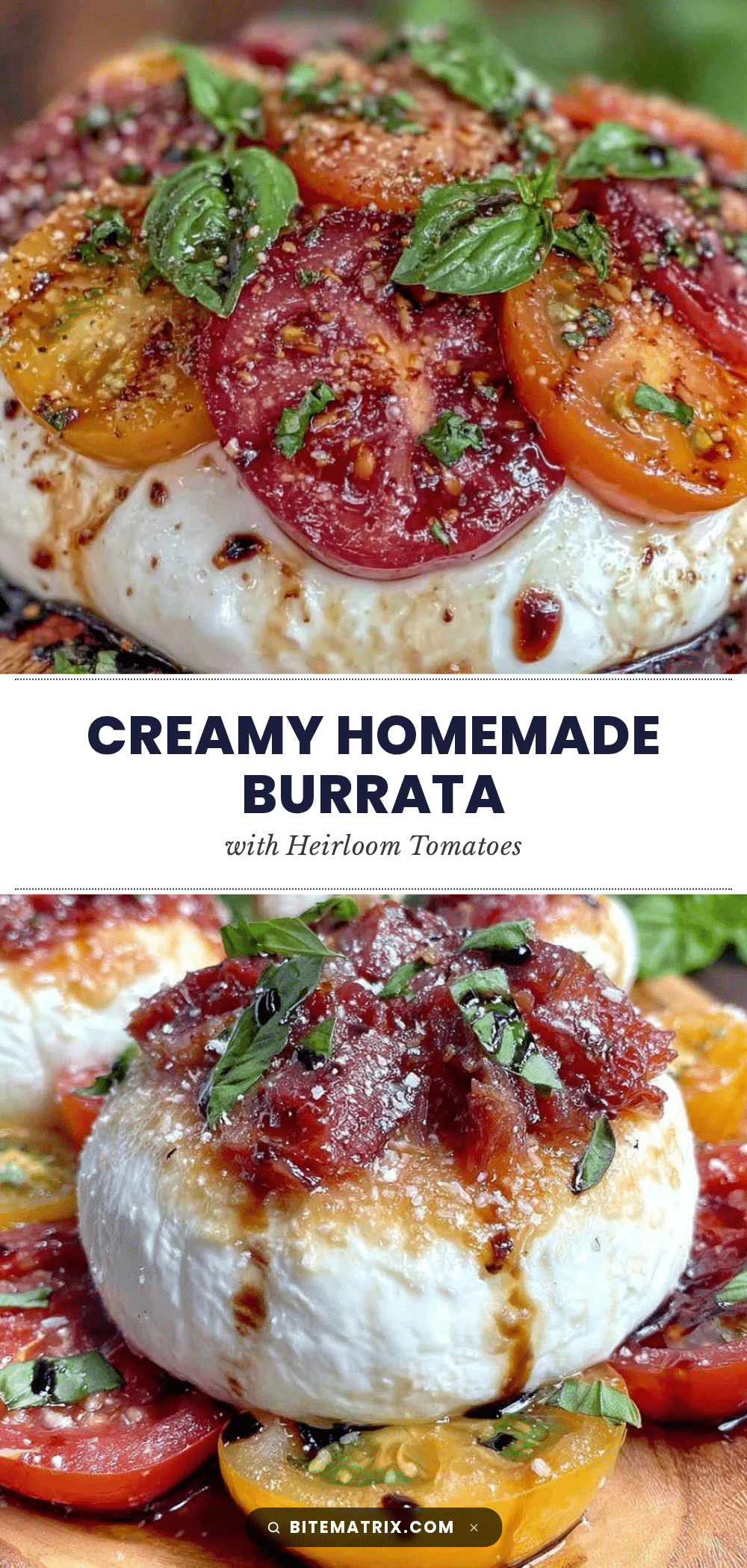
Fresh Homemade Mozzarella Burrata Caprese Recipe with Heirloom Tomatoes

A quick and easy recipe to make fresh homemade mozzarella burrata paired with vibrant heirloom tomatoes and basil for a delicious caprese salad.
- Prep Time: 15 minutes
- Cook Time: 30 minutes
- Total Time: 45 minutes
- Yield: 4 servings
- Category: Appetizer
- Cuisine: Italian
Ingredients
- Whole milk (1 gallon / 3.8 liters) – Use fresh, not ultra-pasteurized for best results
- Heavy cream (1 cup / 240 ml) – adds richness to the creamy center
- Citric acid (1 ½ teaspoons) – dissolves in ¼ cup water; helps curdle the milk
- Liquid rennet (¼ teaspoon) – diluted in ¼ cup water; essential for curd formation
- Non-iodized salt (1 teaspoon) – enhances flavor, avoid iodized to prevent bitterness
- Heirloom tomatoes (3-4 medium, assorted colors) – ripe and fragrant
- Fresh basil leaves (1 cup) – pick vibrant, unwilted leaves
- Extra virgin olive oil (3 tablespoons) – choose a robust, fruity brand
- Balsamic reduction or glaze (optional, 1 tablespoon) – adds sweet tang
- Freshly ground black pepper (to taste)
Instructions
- Dissolve 1 ½ teaspoons of citric acid in ¼ cup cold water, and dilute ¼ teaspoon liquid rennet in another ¼ cup of water. Set aside.
- Pour 1 gallon (3.8 liters) of whole milk into a large pot. Slowly heat over medium heat, stirring gently to prevent scorching, until the milk reaches 90°F (32°C).
- Stir in the dissolved citric acid evenly. Continue heating until the milk reaches 105°F (40°C).
- Stir in the diluted rennet gently but thoroughly. Stop stirring and allow the milk to sit undisturbed for 5 minutes until it forms a gel-like consistency. If still liquid after 5 minutes, stir gently and wait another 2-3 minutes.
- Cut the curd into 1-inch cubes using a long knife. Slowly heat the curds to 110°F (43°C) over 5 minutes, stirring gently to keep curds separate.
- Using a slotted spoon, transfer curds into a bowl, leaving whey behind.
- Microwave the curds on high for 1 minute, then drain excess whey. Fold and stretch the cheese with hands (wear gloves if hot), microwave again for 35 seconds, repeat stretching until smooth and elastic.
- Take a portion of stretched mozzarella, flatten it, add a spoonful of heavy cream in the center, and fold edges to seal, creating a pouch.
- Place burrata balls in cold water for 10 minutes, then drain and sprinkle with salt.
- Slice heirloom tomatoes into thick rounds, arrange on a plate. Tear fresh basil and scatter over tomatoes, place burrata balls on top. Drizzle with olive oil, add cracked black pepper, and a drizzle of balsamic glaze if using.
Notes
[‘Use fresh, high-fat milk for best curd formation; avoid ultra-pasteurized milk.’, ‘Maintain precise temperature control to avoid rubbery or crumbly curds.’, ‘Stretch curds gently to keep cheese moist and elastic.’, ‘Do not skip the cream filling for signature burrata texture.’, ‘Prep tomatoes and basil ahead to preserve freshness and color.’, ‘You can save whey for baking or discard it.’, ‘Store burrata submerged in whey or salted water in an airtight container in the fridge for up to 2 days.’, ‘Serve burrata and caprese at room temperature for best flavor.’, ‘Reheat burrata gently if needed to avoid ruining texture.’]
Nutrition
- Serving Size: One burrata ball wit
- Calories: 275
- Sugar: 3
- Sodium: 300
- Fat: 20
- Saturated Fat: 12
- Carbohydrates: 5
- Fiber: 1
- Protein: 16
Keywords: burrata, homemade mozzarella, caprese, heirloom tomatoes, fresh cheese, Italian recipe, easy cheese recipe, summer salad