
“You really think you can pull mozzarella by hand?” my friend asked, eyebrows raised as I stood over a pot of steaming curds. Honestly, I wasn’t so sure myself the first time I tried making fresh homemade mozzarella stretched by hand with sea salt. It was one of those late afternoons when the kitchen was empty, and I had nothing but a few simple ingredients and a stubborn craving for creamy, fresh cheese. The smell of warm milk and the slight tang of citric acid filled the air as I hesitated, hands ready to plunge into the hot curds.
I’d always assumed mozzarella was one of those fancy cheeses you only get from artisan shops or Italian markets. But there I was, stretching silky strands of cheese, feeling the texture change under my fingers, almost like magic. The salt sprinkled on top wasn’t just for flavor—it was part of the tradition, the final touch that made the whole thing sing. It dawned on me then: fresh homemade mozzarella stretched by hand with sea salt isn’t just a recipe. It’s a little act of patience, a sensory reward, and a reminder that sometimes the simplest things take a bit of love and practice.
Now, I find myself making this creamy cheese several times a week, especially when I want something fresh and satisfying without heading to the store. And every time, that moment of quiet focus in the kitchen, hands warm in the curds, is a little reset for the day—a way to slow down and enjoy something pure. If you’re curious about trying your hand at this, I promise it’s worth it. The texture, the flavor, the whole process feels like a small celebration of food in its simplest, most delicious form.
Why You’ll Love This Recipe
Making fresh homemade mozzarella stretched by hand with sea salt isn’t just about the end result—it’s about the experience. After a few trials in my kitchen, I can confidently say this recipe is a keeper for anyone who loves fresh cheese or wants to try something hands-on and rewarding.
- Quick & Easy: You can have fresh mozzarella ready in about 30 minutes, perfect for busy evenings or spontaneous dinner plans.
- Simple Ingredients: No need for fancy or hard-to-find items; just milk, citric acid, rennet, and sea salt are the essentials.
- Perfect for Entertaining: Whether you’re assembling a Caprese salad or topping homemade pizza, this cheese adds that creamy, fresh touch guests notice.
- Crowd-Pleaser: Kids love the milky, mild flavor, and adults appreciate the authentic texture and fresh taste.
- Unbelievably Delicious: The hand-stretched texture creates a delicate chew and melt-in-your-mouth creaminess that store-bought just can’t match.
What sets this apart from other homemade mozzarella recipes is the hand-stretching technique combined with a sprinkle of coarse sea salt at the end. This little step brings out the cheese’s natural flavor and texture in a way that feels authentic and artisanal. Plus, I’ve found that using fresh, high-quality whole milk (I often use organic milk from a trusted local brand) makes all the difference in creaminess.
This isn’t just cheese—it’s a little ritual that turns simple ingredients into something special. Whether you’re aiming to impress guests with a fresh appetizer or just want to add a creamy note to your homemade dishes (like the easy Italian sub sandwich skewers I love for casual gatherings), this recipe offers that kind of satisfaction you can’t quite describe but know when you taste it.
What Ingredients You Will Need
This fresh homemade mozzarella stretched by hand with sea salt recipe uses simple, wholesome ingredients to deliver bold flavor and a satisfying texture without fuss. Most are pantry staples, and a few are specialty items you might already have if you enjoy cooking from scratch.
- Whole Milk – 1 gallon (3.8 liters), preferably not ultra-pasteurized for better curd formation. I often choose organic or local dairy when I can.
- Citric Acid – 1 ½ teaspoons dissolved in ¼ cup (60 ml) water. This helps acidify the milk and start curdling.
- Liquid Rennet – ¼ teaspoon diluted in ¼ cup (60 ml) water. This enzyme helps the milk coagulate into curds.
- Sea Salt – 1 to 2 teaspoons, coarse or flaked. Adds flavor and a slight crunch, enhancing the cheese’s natural creaminess.
- Ice Water – about 1 cup (240 ml) for cooling the cheese after stretching. This step is key for texture and handling.
When it comes to sourcing, I recommend brands like Jungbunzlauer for citric acid and high-quality animal or vegetarian rennet from specialty food stores or online. If you want to experiment, lemon juice can sometimes substitute for citric acid, but the results vary.
For a dairy-free twist (though technically not mozzarella), you might try plant-based milk, but this recipe shines brightest with real dairy. Remember, fresh mozzarella is a celebration of milk’s natural richness, so picking fresh, high-fat milk really pays off.
Equipment Needed
Making fresh homemade mozzarella stretched by hand with sea salt requires just a few kitchen tools, many of which you might already have on hand. Here’s what I use and recommend:
- Large Heavy-Bottomed Pot: Stainless steel works well to heat milk evenly without scorching. I avoid aluminum because of reactions with acid.
- Slotted Spoon: For lifting curds gently from the whey.
- Thermometer: A digital kitchen thermometer is handy to hit precise temperatures (around 90°F/32°C to 135°F/57°C during different stages).
- Microwave-Safe Bowl or Heatproof Container: For stretching the cheese in hot water.
- Fine Mesh Strainer or Cheesecloth: Optional, for draining whey if needed.
- Bowl of Ice Water: Essential to cool the cheese after stretching and help it hold shape.
If you don’t have a thermometer, you can still judge by feel (warm to hot but not boiling), but temperature control makes a big difference. A budget-friendly digital thermometer from a local store or online is a worthwhile investment, especially if you enjoy cooking projects like this.
Preparation Method

- Warm the Milk: Pour 1 gallon (3.8 liters) of whole milk into your heavy-bottomed pot. Slowly heat the milk over medium heat to 90°F (32°C), stirring gently to avoid scorching. This takes about 10-15 minutes. Use your thermometer to watch closely.
- Add Citric Acid: Stir in the dissolved 1 ½ teaspoons of citric acid solution evenly. This will start acidifying the milk, which is essential for curd formation. After stirring, the milk might look slightly curdled or cloudy.
- Add Rennet: Pour in the diluted ¼ teaspoon liquid rennet and stir gently for 30 seconds. Then stop stirring and let the milk sit undisturbed for 5-10 minutes. The milk should set into a custard-like curd that cleanly breaks when you insert a knife.
- Cut the Curds: Using a knife, cut the curd into 1-inch (2.5 cm) cubes. This helps release the whey.
- Heat the Curds: Slowly heat the curds to 105°F (40°C) over about 5 minutes, stirring gently to keep curds separated. Then turn off heat and let sit for 5 minutes.
- Drain the Whey: Using a slotted spoon, transfer the curds to a microwave-safe bowl, leaving as much whey behind as possible. If you want, strain through cheesecloth for a drier texture.
- Stretch the Cheese: Microwave the curds on high for 1 minute. Carefully drain any excess whey, then fold and stretch the cheese with clean hands (be cautious—it will be hot!). Repeat microwaving for 30 seconds and stretching 2-3 times until the cheese becomes shiny and elastic. This step usually takes about 5-7 minutes. If the cheese cools too much, microwave again briefly.
- Salt and Shape: Sprinkle 1 to 2 teaspoons of coarse sea salt over the cheese and fold it in evenly. Shape the cheese into balls or logs as you like.
- Cool: Place the shaped mozzarella into a bowl of ice water for 5 minutes to firm up and help it hold shape.
Watch for the cheese becoming smooth and elastic during stretching—that’s the sign you’re getting it just right. If it feels crumbly or breaks apart, it might need a bit more heat or a gentler touch. Overstretching can make it tough, so stop when it feels pliable.
Cooking Tips & Techniques
Working with fresh milk and curds is a bit of an art, and I’ve learned a few things along the way that help make this recipe foolproof.
- Temperature Control is Key: Hitting the right temperature at each stage helps the milk coagulate properly and the curds stretch perfectly. A kitchen thermometer is worth having.
- Don’t Rush the Curd Setting: Let the milk sit undisturbed after adding rennet. Moving too soon can break the curds and make stretching difficult.
- Stretch Carefully: The cheese should be hot but not scalding. If it cools, microwave in short bursts to keep it pliable. Use clean hands or food-safe gloves.
- Salt After Stretching: Adding sea salt at the end gives a nice crunch and flavor burst without toughening the cheese.
- Practice Makes Perfect: The first batch might feel a bit tricky, but once you get the hang of the texture changes, it becomes almost meditative. I like to multitask with a simple side dish, like the fresh creamy cucumber dill salad while the curds set.
Variations & Adaptations
While the classic fresh homemade mozzarella stretched by hand with sea salt is wonderful as is, I’ve enjoyed playing with a few variations:
- Herbed Mozzarella: Fold in finely chopped fresh basil or oregano during the stretching phase for an aromatic twist.
- Low-Sodium Version: Reduce or omit sea salt and serve with a drizzle of good olive oil and cracked black pepper instead.
- Buffalo Milk: Try using buffalo milk if available for a richer flavor and creamier texture, common in traditional mozzarella di bufala.
- Oven-Stretched: Instead of microwaving, you can stretch the cheese in a pot of hot (not boiling) water on the stove—this method takes more patience but works well.
- Dairy-Free Options: While this recipe is dairy-based, I’ve experimented with cashew-based cheeses for a vegan alternative, though they don’t stretch like real mozzarella.
One of my favorite adaptations is serving this fresh mozzarella alongside homemade garlic herb chicken, like the savory beer can chicken with herb butter glaze. The creamy cheese balances the savory flavors beautifully.
Serving & Storage Suggestions
Fresh homemade mozzarella stretched by hand with sea salt is best enjoyed soon after making it, when it’s soft, warm, and tender. Serve it at room temperature for the fullest flavor.
- Serving Ideas: Slice it on a Caprese salad with ripe tomatoes and basil, drizzle with balsamic vinegar and olive oil, or layer it on fresh bread for a quick sandwich.
- Pairings: Goes wonderfully with fresh basil, heirloom tomatoes, crusty bread, or alongside light pasta dishes like a simple pesto linguine.
- Storage: Store mozzarella in an airtight container with a little whey or lightly salted water in the fridge for up to 3 days. The texture will firm up but remains delicious.
- Reheating: Gently warm in the microwave for 10-15 seconds or in a hot water bath to regain softness before serving again.
- Flavor Development: The cheese mellows and the salt deepens over time, but fresh is always best for that signature stretch and melt.
Nutritional Information & Benefits
Fresh homemade mozzarella stretched by hand with sea salt offers a creamy, protein-rich addition to meals with moderate calories.
| Nutrient | Per 1 oz (28g) Serving |
|---|---|
| Calories | 85 |
| Protein | 6-7 grams |
| Fat | 6 grams |
| Calcium | 14% DV |
Mozzarella is a good source of calcium and protein, supporting bone health and muscle function. The sea salt adds flavor but be mindful of sodium intake if you watch your salt. This fresh cheese is naturally gluten-free and low-carb, fitting well into many diets.
From a wellness perspective, making your own mozzarella means avoiding the preservatives and additives common in store-bought versions. It’s a wholesome, satisfying way to enjoy dairy in a fresh, unprocessed form.
Conclusion
Fresh homemade mozzarella stretched by hand with sea salt is one of those recipes that feels like a small kitchen victory every time. It’s simple, hands-on, and deeply satisfying—transforming a few basic ingredients into creamy, tender cheese with a touch of rustic charm.
I love this recipe because it invites you to slow down, feel the textures, and appreciate the magic of food made from scratch. Plus, it pairs beautifully with so many dishes, from quick snacks to elegant meals. Feel free to make it your own by adding herbs, adjusting salt, or pairing it with your favorite fresh foods.
If you’ve enjoyed other homemade creations like the fresh watermelon feta mint salad or the creamy Hawaiian macaroni salad, you’re going to appreciate how fresh mozzarella brings a new dimension to your kitchen adventures. Give it a try, and let me know how your stretching goes!
Happy cheesemaking!
FAQs About Fresh Homemade Mozzarella Stretched by Hand with Sea Salt
How long does homemade mozzarella last in the fridge?
It typically stays fresh for up to 3 days when stored in an airtight container with a bit of whey or salted water.
Can I use skim or low-fat milk for this recipe?
Whole milk is best for creaminess and stretch. Skim or low-fat milk won’t stretch properly and results in a firmer, less creamy cheese.
Is it necessary to use sea salt instead of regular salt?
Sea salt adds a subtle crunch and flavor depth. You can use regular kosher salt, but coarse sea salt is traditional and enhances texture.
What if the cheese doesn’t stretch? How can I fix it?
The cheese may need more heat during stretching or the curds might not be acidic enough. Try warming the curds more and ensure you added the right amount of citric acid.
Can I make mozzarella without a microwave?
Yes! You can stretch the cheese in hot water (around 135°F/57°C) on the stove. It takes a little patience but works well.
Pin This Recipe!
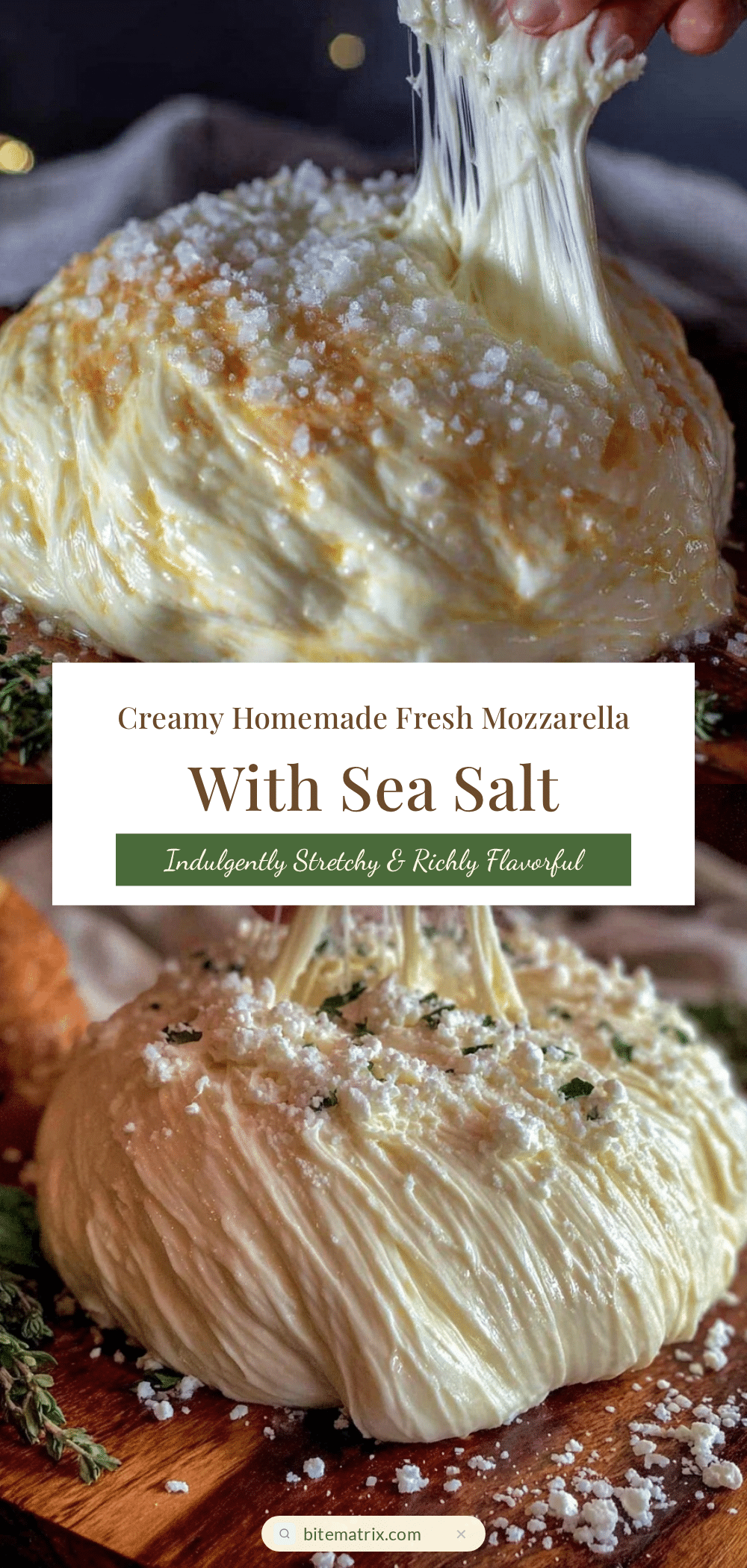
Fresh Homemade Mozzarella Stretched by Hand with Sea Salt

A simple and rewarding recipe for making creamy, fresh mozzarella cheese at home using basic ingredients and a hand-stretching technique with sea salt for authentic flavor.
- Prep Time: 15 minutes
- Cook Time: 15 minutes
- Total Time: 30 minutes
- Yield: 8 servings 1x
- Category: Main Course
- Cuisine: Italian
Ingredients
- 1 gallon whole milk (preferably not ultra-pasteurized)
- 1 ½ teaspoons citric acid dissolved in ¼ cup water
- ¼ teaspoon liquid rennet diluted in ¼ cup water
- 1 to 2 teaspoons coarse or flaked sea salt
- about 1 cup ice water
Instructions
- Warm the milk: Pour 1 gallon of whole milk into a heavy-bottomed pot. Slowly heat over medium heat to 90°F (32°C), stirring gently to avoid scorching, about 10-15 minutes.
- Add citric acid: Stir in the dissolved 1 ½ teaspoons of citric acid solution evenly. The milk may look slightly curdled or cloudy.
- Add rennet: Pour in the diluted ¼ teaspoon liquid rennet and stir gently for 30 seconds. Stop stirring and let the milk sit undisturbed for 5-10 minutes until it sets into a custard-like curd.
- Cut the curds: Using a knife, cut the curd into 1-inch cubes to release whey.
- Heat the curds: Slowly heat the curds to 105°F (40°C) over about 5 minutes, stirring gently to keep curds separated. Turn off heat and let sit for 5 minutes.
- Drain the whey: Using a slotted spoon, transfer curds to a microwave-safe bowl, leaving whey behind. Optionally strain through cheesecloth for drier texture.
- Stretch the cheese: Microwave curds on high for 1 minute. Drain excess whey, then fold and stretch cheese with clean hands. Repeat microwaving for 30 seconds and stretching 2-3 times until shiny and elastic, about 5-7 minutes. Microwave briefly if cheese cools too much.
- Salt and shape: Sprinkle 1 to 2 teaspoons coarse sea salt over cheese and fold in evenly. Shape into balls or logs.
- Cool: Place shaped mozzarella into ice water for 5 minutes to firm up and hold shape.
Notes
Use whole milk for best creaminess and stretch. Temperature control is key for proper curd formation and stretching. If cheese cools during stretching, microwave briefly to keep pliable. Salt after stretching for best texture and flavor. Can stretch cheese in hot water on stove if no microwave is available.
Nutrition
- Serving Size: 1 oz (28 g)
- Calories: 85
- Fat: 6
- Protein: 6.5
Keywords: fresh mozzarella, homemade cheese, hand-stretched mozzarella, sea salt mozzarella, creamy cheese, easy mozzarella recipe