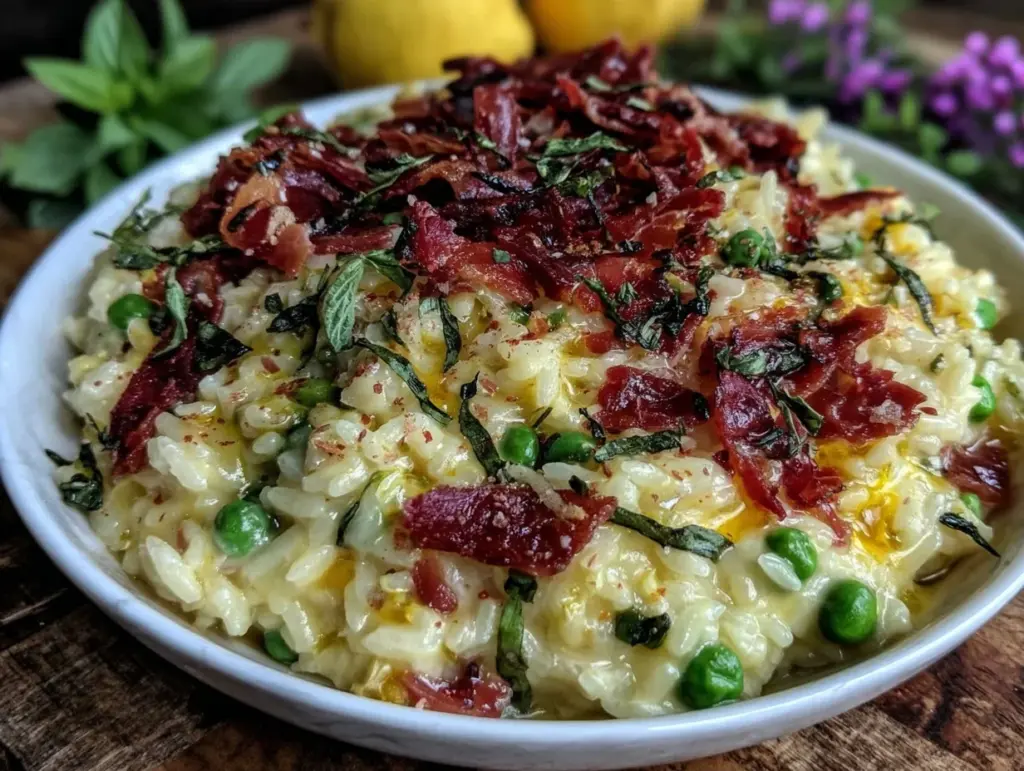
“Wait, did you just throw peas in risotto and call it dinner?” my roommate asked, skepticism thick in her voice as I stirred the pot on a rushed Tuesday evening. Honestly, I was half-expecting a flop. It started as a quick fix after a long day—nothing fancy, just pantry staples, a bag of frozen peas, and some prosciutto I’d forgotten was hanging in the fridge. I wasn’t exactly aiming for a masterpiece; I just needed something comforting and fast.
But as the creamy rice shimmered and the crispy prosciutto crackled atop, that skeptic turned curious, then downright hungry. The bright green burst of spring peas mixed with the rich, velvety texture of the risotto felt like a little surprise party in my mouth. It wasn’t just a dinner; it was a moment of calm after chaos. You know that quiet satisfaction when the food just clicks? Yeah, this recipe delivers that.
It’s funny how this simple dish became a weekday staple. I found myself making it over and over, tweaking the seasoning here, adding a splash of white wine there, but the heart of it stayed the same. The crispy prosciutto isn’t just a pretty garnish—it’s the crunch that contrasts with the silky rice, making every bite interesting. This spring pea risotto stuck around because it’s honest food, no fuss, but with a bit of flair. Sometimes, the best recipes come from those “I just tossed this together” moments that surprise you in the best way.
So if you’ve got a busy evening, a craving for something fresh yet cozy, or just want to impress without the stress, this creamy spring pea risotto with crispy prosciutto might just become your new go-to. It’s the kind of dish that feels like a hug on a plate, but with a touch of elegance that makes you want to linger over dinner. And honestly, it’s a reminder that sometimes simple wins.
Why You’ll Love This Creamy Spring Pea Risotto with Crispy Prosciutto Recipe
Having made this recipe countless times, I can say it checks all the boxes when it comes to an ideal dinner. It’s been tested during busy weeknights and leisurely weekends alike, earning rave reviews every time. Here’s what makes it stand out:
- Quick & Easy: This risotto comes together in about 35 minutes, making it perfect for those evenings when you want something special without spending hours in the kitchen.
- Simple Ingredients: No need for exotic items—frozen peas, Arborio rice, chicken broth, and prosciutto are all things you might already have on hand.
- Perfect for Spring and Beyond: The fresh pop of peas makes it ideal for spring dinners, but it’s satisfying and comforting enough for any season.
- Crowd-Pleaser: Whether it’s a casual dinner or a small gathering, the crispy prosciutto topping always impresses guests and family alike.
- Unbelievably Delicious: The creamy texture paired with that salty crunch hits all the right notes for comfort food with a refined twist.
This isn’t just another risotto recipe—it’s one where the peas retain their brightness and bite, thanks to a quick blanch before stirring in, and the prosciutto gets cooked to a perfect, shatteringly crisp texture instead of soggy bits. Plus, adding a splash of white wine (if you’re into it) gives just the right tang to balance the creaminess. I’ve tried similar recipes that end up mushy or bland, but this one nails the texture every time.
It’s the kind of recipe that lets you serve something impressive without fuss—ideal if you want to pair it with a simple salad like the fresh creamy cucumber dill salad for a crisp contrast or even alongside a juicy protein like savory beer can chicken. There’s a satisfying balance here that keeps you coming back—comfort food reimagined, honest, and just plain good.
What Ingredients You Will Need
This recipe uses simple, wholesome ingredients to deliver bold flavor and satisfying texture without the fuss. Most are pantry staples or easy to grab from the store, and you can swap a few things to suit your preferences or dietary needs.
- Arborio rice (1 ½ cups / 300g) – The star for creamy risotto texture; I recommend Carolina or Lundberg brands for consistent results.
- Frozen spring peas (1 cup / 150g) – Adds sweetness and vibrant color; fresh peas work great if you can find them.
- Prosciutto slices (4 oz / 115g) – Thinly sliced for crisping on top, use quality prosciutto like San Daniele for best flavor.
- Chicken broth (4 cups / 950ml) – Homemade or low-sodium store-bought; vegetable broth works for a vegetarian swap.
- Dry white wine (½ cup / 120ml) – Optional but adds nice acidity and depth.
- Shallots (2 small, finely diced) – Adds subtle sweetness and aroma.
- Garlic cloves (2, minced) – Essential flavor boost.
- Parmesan cheese (¾ cup / 75g, freshly grated) – Use good-quality Parmigiano-Reggiano for the best melting and flavor.
- Unsalted butter (3 tbsp / 45g) – For richness and that silky finish.
- Olive oil (2 tbsp / 30ml) – For sautéing shallots and garlic.
- Salt & freshly ground black pepper – To taste, but be mindful since prosciutto and Parmesan add saltiness.
- Lemon zest (from 1 lemon) – Optional but adds a fresh bright note that complements the peas.
If you want to make this recipe gluten-free, just double-check your broth and wine labels. For a dairy-free version, swap butter for olive oil and leave out the Parmesan or use a vegan cheese alternative. When fresh peas are in season, swapping frozen peas for fresh makes this risotto feel even more vibrant.
Equipment Needed
- Large heavy-bottomed skillet or sauté pan – Ideal for even cooking and stirring the risotto. A 12-inch pan works well.
- Medium saucepan – To keep the chicken broth warm while cooking risotto, which is key to proper cooking.
- Wooden spoon or silicone spatula – For stirring the risotto gently without breaking the grains.
- Fine grater or microplane – To grate fresh Parmesan and lemon zest.
- Slotted spoon – Useful for blanching peas or removing crispy prosciutto.
- Chef’s knife and cutting board – For prepping shallots, garlic, and lemon zest.
If you don’t have a heavy-bottomed pan, a good-quality nonstick skillet can work, but watch your heat carefully to avoid burning. I’ve found that using a wooden spoon gives better control over stirring without damaging the rice grains compared to metal utensils. Keeping the broth hot is a small but crucial step that many overlook, so a separate saucepan is worth having. For budget-friendly options, any sturdy sauté pan from your kitchen will do the trick.
Preparation Method
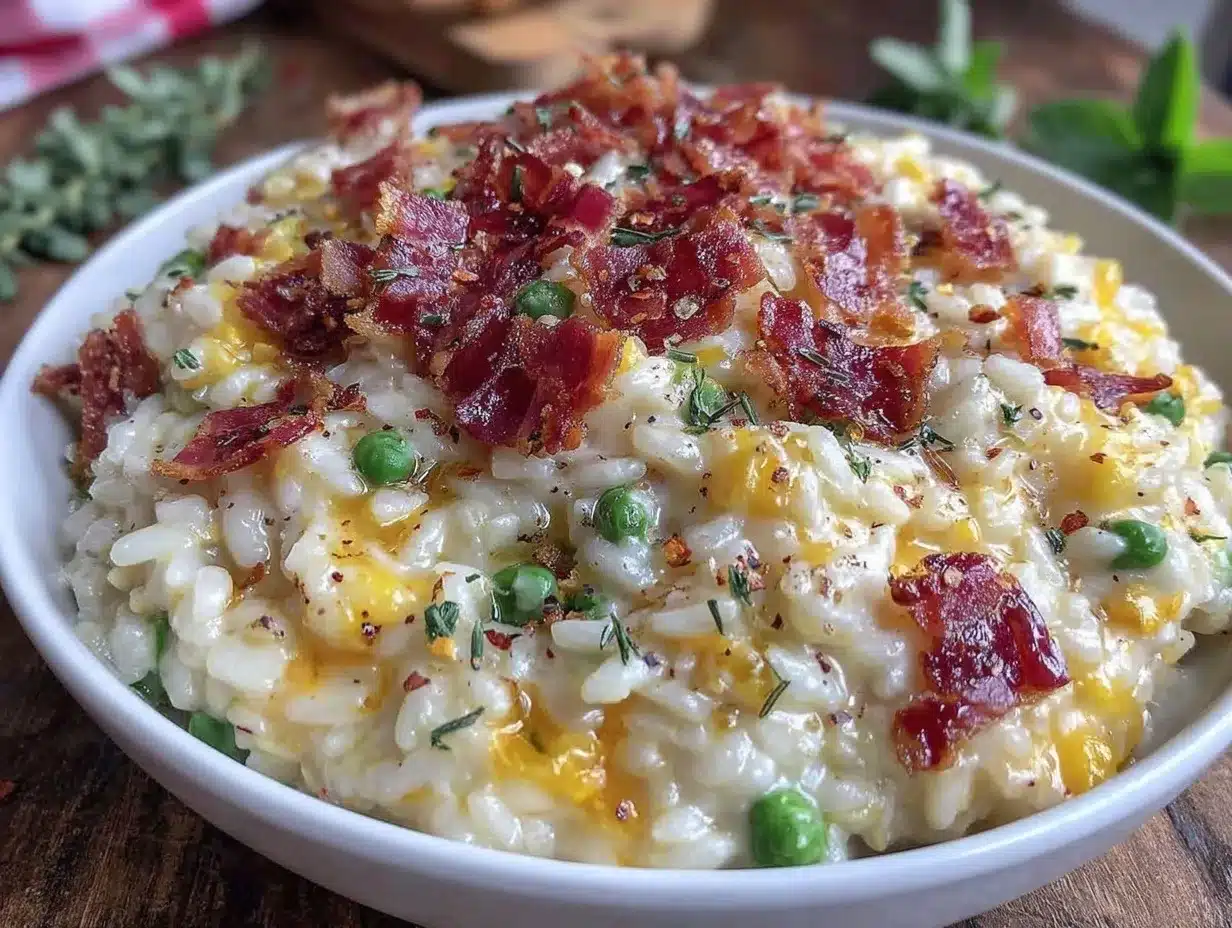
- Prepare your broth and peas: Pour the chicken broth into a medium saucepan and warm it over low heat; it should be hot but not boiling. Meanwhile, blanch the frozen peas in boiling water for 1-2 minutes until bright green and tender-crisp. Drain and set aside.
- Crisp the prosciutto: Heat a large skillet over medium heat. Lay prosciutto slices in a single layer and cook until crispy and golden, about 3-4 minutes per side. Transfer to a paper towel-lined plate to drain excess fat. Once cooled, break into bite-sized pieces and set aside.
- Sauté aromatics: In the same skillet, add olive oil and 1 tablespoon of butter over medium heat. Add finely diced shallots and sauté until translucent, about 3 minutes. Stir in minced garlic and cook for another minute until fragrant.
- Toast the rice: Add Arborio rice to the skillet with shallots and garlic, stirring constantly for 2 minutes to lightly toast the grains. This step helps build the risotto’s signature creamy texture.
- Deglaze with wine: Pour in the white wine and stir until mostly absorbed, about 2-3 minutes. This adds a subtle tang and depth.
- Add warm broth gradually: Begin adding warm chicken broth one ladle (about ½ cup / 120ml) at a time, stirring frequently. Wait until the liquid is mostly absorbed before adding the next ladle. Continue this process for about 18-20 minutes until the rice is creamy and tender but still has a slight bite (al dente).
- Incorporate peas and finish: Stir in the blanched peas during the last 5 minutes of cooking to heat through without losing their brightness. Remove from heat and stir in the remaining 2 tablespoons of butter, grated Parmesan, and lemon zest if using. Season with salt and freshly ground black pepper to taste.
- Plate and garnish: Spoon the risotto onto warm plates and sprinkle generously with crispy prosciutto pieces. A final drizzle of olive oil or a few fresh pea shoots can add a lovely touch.
Watch the risotto closely during broth additions; stirring encourages starch release, but don’t over-stir or it can get gluey. The rice should be tender with a slight bite, not mushy. If you run out of broth before the rice is done, you can add hot water as a last resort. I like to keep my broth warm to maintain even cooking temperature—cold liquid can shock the rice and affect texture.
Cooking Tips & Techniques
Risotto often intimidates home cooks, but with a few insider tips, it’s quite manageable. First, patience is your best friend. Adding broth gradually and stirring frequently lets the rice release starch, creating that creamy consistency.
Don’t rush the toasting step; lightly toasting the rice grains before adding liquid adds a subtle nuttiness. When stirring, be gentle—vigorous stirring breaks the grains and can lead to a mushy mess.
On my early attempts, I made the mistake of adding all the broth at once, which turned the risotto soupy and bland. Also, skipping the blanching step for peas made them taste underwhelming and dull in color. Blanching locks in that bright green and fresh flavor.
For crisp prosciutto, cook it over medium heat and keep a close eye—prosciutto can go from perfect to burnt quickly. Let it drain on paper towels to lose excess fat before topping the risotto. This contrast of creamy and crispy is what takes the dish to another level.
If you’re multitasking, start warming broth and blanching peas first, then prep your aromatics while the prosciutto crisps. This way, you can flow from one step to the next without downtime. Consistency is easier when you keep everything warm and ready.
Variations & Adaptations
- Vegetarian Version: Skip the prosciutto and use vegetable broth instead of chicken. Add sautéed mushrooms or toasted pine nuts for texture and umami.
- Vegan Adaptation: Replace butter with olive oil and use nutritional yeast or vegan Parmesan alternatives. Use vegetable broth and omit the prosciutto or swap with crispy smoked tempeh strips.
- Seasonal Twist: Swap spring peas with asparagus tips or fresh fava beans when in season. You can also fold in fresh herbs like mint or tarragon for brightness.
- Different Proteins: Instead of prosciutto, crispy pancetta or bacon works beautifully. For a lighter option, top with seared scallops or grilled shrimp.
- Grain Alternatives: For a lower-carb take, try pearl barley or farro, but adjust cooking times accordingly.
One personal favorite is adding a handful of baby spinach stirred in at the end for a pop of color and nutrition. It’s a quick way to amp up greens without changing the flavor too much.
Serving & Storage Suggestions
This creamy spring pea risotto is best served immediately while still warm and luscious, as risotto tends to thicken upon cooling. Plate it with a sprinkle of extra Parmesan and the crispy prosciutto on top for a lovely textural contrast.
It pairs wonderfully with light sides like a crisp green salad or the fresh creamy cucumber dill salad. For drinks, a chilled glass of Pinot Grigio or a dry Sauvignon Blanc complements the flavors nicely.
To store leftovers, transfer to an airtight container and refrigerate for up to 2 days. When reheating, add a splash of broth or water to loosen the risotto and warm gently over low heat while stirring. Avoid microwaving without adding liquid, or it can dry out and become chewy.
Flavors deepen after resting, so if you have time, risotto can taste even better the next day with a quick reheat and fresh Parmesan stirred in. Just remember to crisp new prosciutto or bacon on top freshly for the best experience.
Nutritional Information & Benefits
This recipe makes about 4 servings. Each serving roughly contains:
| Calories | 380 kcal |
|---|---|
| Protein | 15g |
| Carbohydrates | 45g |
| Fat | 12g |
| Fiber | 4g |
Spring peas add fiber, vitamins A and C, and a hint of natural sweetness, making this risotto not just tasty but nourishing. The protein from prosciutto and Parmesan helps balance the meal. Using low-sodium broth keeps sodium in check, and swapping butter for olive oil can reduce saturated fat if desired.
This dish fits well into a balanced diet, offering complex carbs and moderate fat. For gluten-free needs, ensure broth and wine are certified gluten-free. People with dairy allergies can omit cheese and butter, but the creamy texture will be less pronounced.
Conclusion
Creamy spring pea risotto with crispy prosciutto is one of those recipes that feels special yet is surprisingly simple to make. It’s the kind of dish you can whip up on a hectic evening but still impress at the dinner table. The fresh pop of peas, the silky rice, and that irresistible salty crunch from prosciutto make it a winner every time.
I love this recipe because it reminds me that comfort food doesn’t have to be complicated or heavy. It’s adaptable, forgiving, and downright delicious. Plus, it pairs beautifully with many of my favorite sides and mains, like the savory beer can chicken, making a complete, satisfying meal.
Give it a try, experiment with your own tweaks, and let me know how you make it your own. Cooking should be joyful and a little adventurous, and this risotto is a cozy place to start. Happy cooking!
Frequently Asked Questions about Creamy Spring Pea Risotto with Crispy Prosciutto
- Can I use fresh peas instead of frozen?
Yes! Fresh peas work wonderfully, especially in spring. Just blanch them briefly to keep their vibrant color and sweetness. - Is it okay to skip the white wine?
Absolutely. You can omit the wine and simply use more broth. The risotto will still be delicious but with a slightly different flavor profile. - How do I keep the risotto creamy without it getting mushy?
Add broth gradually and stir gently but frequently. Stop cooking once the rice is tender but still has a slight bite (al dente). - Can I make this risotto ahead of time?
You can prepare it a day ahead, but risotto is best fresh. Reheat gently with added broth and crisp fresh prosciutto to maintain texture. - What can I substitute for prosciutto if I don’t eat pork?
Try crispy turkey bacon, smoked tempeh, or omit it altogether and add toasted nuts for crunch.
Pin This Recipe!
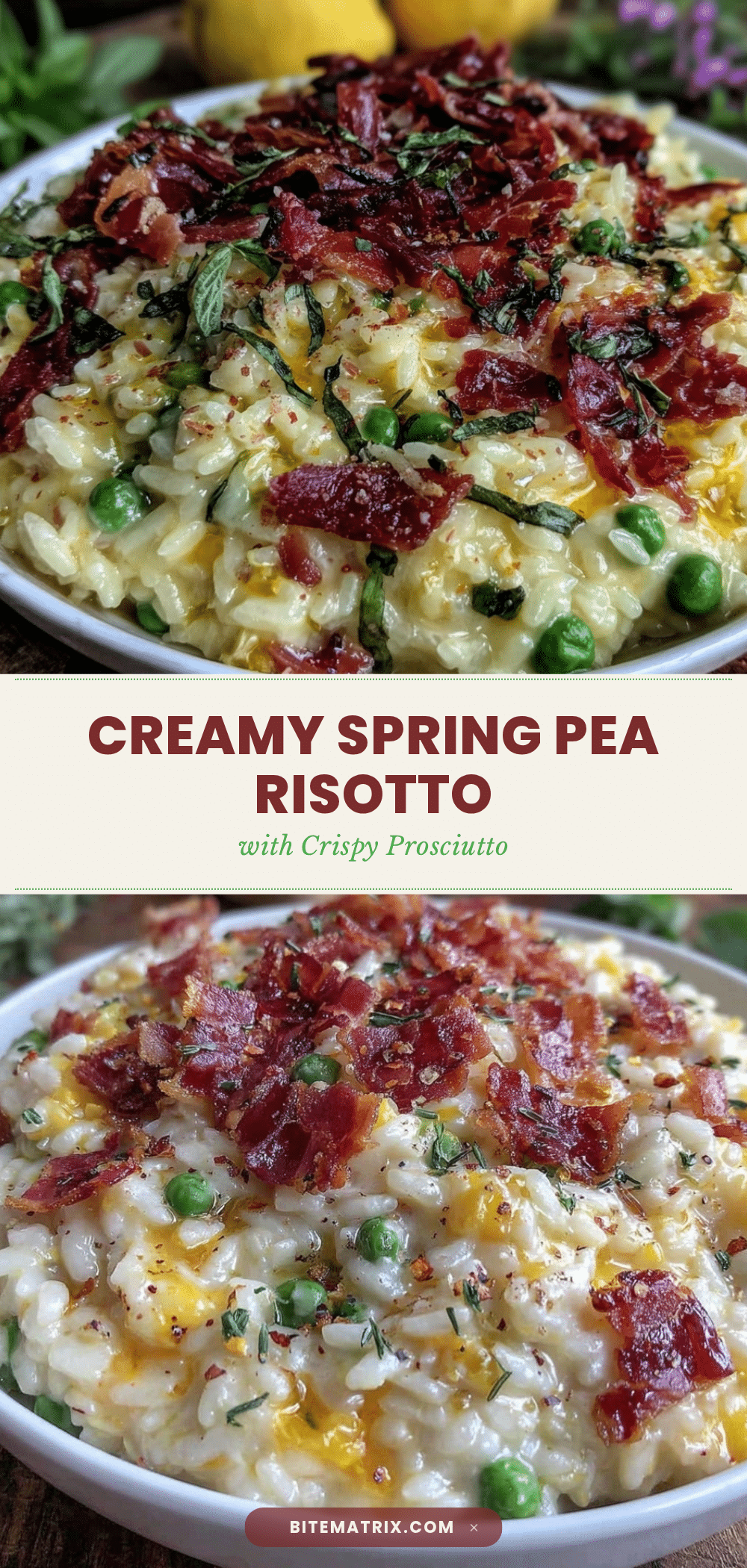
Creamy Spring Pea Risotto with Crispy Prosciutto

A quick and easy risotto featuring creamy Arborio rice, vibrant spring peas, and crispy prosciutto for a comforting yet elegant dinner.
- Prep Time: 10 minutes
- Cook Time: 25 minutes
- Total Time: 35 minutes
- Yield: 4 servings 1x
- Category: Main Course
- Cuisine: Italian
Ingredients
- 1 ½ cups Arborio rice (300g)
- 1 cup frozen spring peas (150g)
- 4 oz prosciutto slices (115g)
- 4 cups chicken broth (950ml)
- ½ cup dry white wine (120ml) – optional
- 2 small shallots, finely diced
- 2 garlic cloves, minced
- ¾ cup freshly grated Parmesan cheese (75g)
- 3 tbsp unsalted butter (45g)
- 2 tbsp olive oil (30ml)
- Salt and freshly ground black pepper, to taste
- Lemon zest from 1 lemon (optional)
Instructions
- Pour the chicken broth into a medium saucepan and warm it over low heat; it should be hot but not boiling. Meanwhile, blanch the frozen peas in boiling water for 1-2 minutes until bright green and tender-crisp. Drain and set aside.
- Heat a large skillet over medium heat. Lay prosciutto slices in a single layer and cook until crispy and golden, about 3-4 minutes per side. Transfer to a paper towel-lined plate to drain excess fat. Once cooled, break into bite-sized pieces and set aside.
- In the same skillet, add olive oil and 1 tablespoon of butter over medium heat. Add finely diced shallots and sauté until translucent, about 3 minutes. Stir in minced garlic and cook for another minute until fragrant.
- Add Arborio rice to the skillet with shallots and garlic, stirring constantly for 2 minutes to lightly toast the grains.
- Pour in the white wine and stir until mostly absorbed, about 2-3 minutes.
- Begin adding warm chicken broth one ladle (about ½ cup / 120ml) at a time, stirring frequently. Wait until the liquid is mostly absorbed before adding the next ladle. Continue this process for about 18-20 minutes until the rice is creamy and tender but still has a slight bite (al dente).
- Stir in the blanched peas during the last 5 minutes of cooking to heat through without losing their brightness. Remove from heat and stir in the remaining 2 tablespoons of butter, grated Parmesan, and lemon zest if using. Season with salt and freshly ground black pepper to taste.
- Spoon the risotto onto warm plates and sprinkle generously with crispy prosciutto pieces. Optionally, drizzle with olive oil or garnish with fresh pea shoots.
Notes
Keep broth warm while cooking to maintain even temperature. Add broth gradually and stir gently but frequently to release starch and achieve creamy texture. Blanch peas briefly to retain bright color and sweetness. Crisp prosciutto carefully to avoid burning and drain excess fat. If out of broth, add hot water as a last resort. For dairy-free, substitute butter with olive oil and use vegan cheese alternatives. For vegetarian, omit prosciutto and use vegetable broth.
Nutrition
- Serving Size: 1 serving (approxima
- Calories: 380
- Sugar: 4
- Sodium: 550
- Fat: 12
- Saturated Fat: 7
- Carbohydrates: 45
- Fiber: 4
- Protein: 15
Keywords: risotto, spring peas, prosciutto, creamy risotto, easy dinner, quick risotto, Italian recipe, comfort food