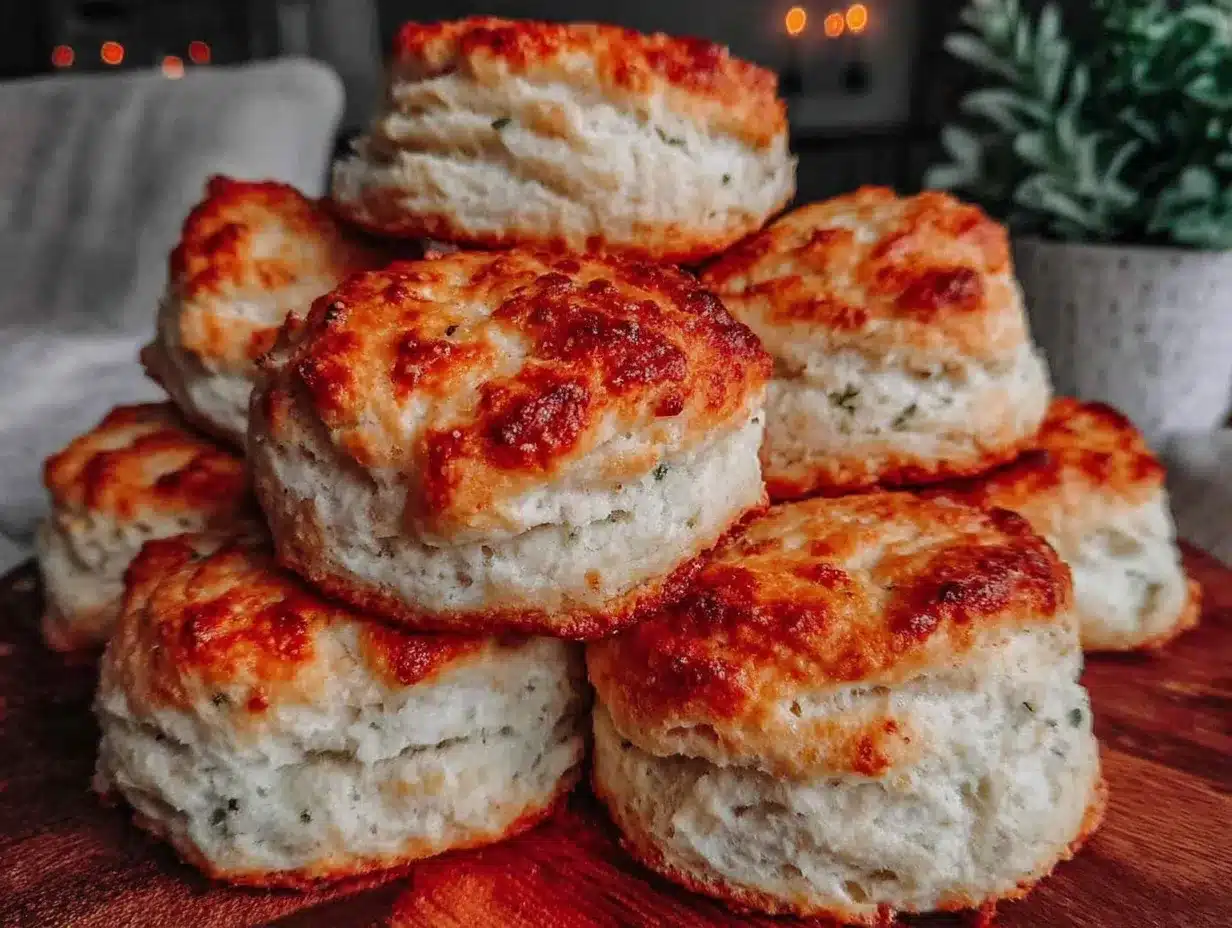
“You sure those are biscuits?” My roommate asked, eyeing the golden rounds cooling on the rack. Honestly, I wasn’t convinced myself at first. I was in a rush, the fridge was nearly empty, and buttermilk? Nope. No buttermilk in sight. So, I grabbed what I had: self-rising flour, baking powder, and whole milk. Just three ingredients, no fancy stuff, no fuss.
It was a bit of a kitchen experiment born from a chaotic weeknight scramble—no time to run to the store, no patience for complicated recipes. I shaped the dough quickly and popped it in the oven, thinking it’d be a crumbly flop. But moments later, the kitchen filled with a warm, comforting scent that reminded me of cozy mornings at my grandma’s house. The biscuits came out fluffy, tender, with a golden crust that begged for butter.
Since that night, these quick fluffy 3-ingredient biscuits without buttermilk have become my go-to for everything from weekend breakfasts to last-minute sides. They’re surprisingly forgiving, easy to throw together, and give me that classic biscuit feel without the buttermilk hassle. Sometimes, simple pantry staples really do the trick better than you’d expect.
What’s wild is how these biscuits bring that same warm, soft, flaky texture you’d expect from a more involved recipe. They’re proof you don’t need a dozen ingredients or hours to get it right. Just a small handful of basics and a bit of love in the oven. If you’ve ever thought making biscuits without buttermilk was a no-go, this recipe might just change your mind.
Why You’ll Love This Quick Fluffy 3-Ingredient Biscuits Without Buttermilk Recipe
After testing this recipe multiple times—let’s be honest, I made these biscuits three times in one week last month—I can say it’s become a kitchen essential. Here’s why this recipe stands out:
- Quick & Easy: Ready in under 25 minutes from start to finish. Perfect for busy mornings or when you need a fast side for dinner.
- Simple Ingredients: Uses pantry staples you probably already have—no buttermilk, no fancy dairy.
- Perfect for Any Occasion: Whether it’s a casual brunch, a last-minute potluck, or a cozy weeknight dinner, these biscuits fit right in.
- Crowd-Pleaser: Fluffy, tender, and buttery—kids and adults alike keep coming back for more.
- Unbelievably Delicious: The texture is light yet satisfying, with a golden, slightly crisp top that melts in your mouth.
- Unique Twist: Unlike traditional biscuit recipes that rely heavily on buttermilk, this one uses a clever balance of self-rising flour and milk that keeps things fluffy without that tangy ingredient.
This isn’t just another biscuit recipe—it’s a reliable kitchen hack for when you need that comforting, flaky bite but don’t have the usual ingredients on hand. Honestly, it’s the kind of recipe that makes you close your eyes and savor the first bite, knowing you whipped it up with minimal effort and maximum flavor.
What Ingredients You Will Need
This recipe relies on three simple ingredients that come together to create that classic biscuit texture—soft, fluffy, and perfect with butter or jam. Here’s what you’ll need:
- Self-rising flour (2 cups / 240 grams): This is key because it already contains the leavening agent and salt needed for the rise and flavor. I like using brands like King Arthur or White Lily for consistent results.
- Whole milk (3/4 cup / 180 ml): Adds moisture and richness. You can swap with 2% or even almond milk for a dairy-free twist, but whole milk gives the best tenderness.
- Baking powder (1 teaspoon): Just a little extra boost to help the biscuits rise beautifully since we’re skipping buttermilk.
That’s it! No butter, no eggs, no buttermilk. It’s all about simplicity with ingredients you can grab without a second thought. If you’re out of self-rising flour, you can make your own by combining 2 cups of all-purpose flour with 3 teaspoons of baking powder and 1/2 teaspoon of salt. This little substitution is a lifesaver in a pinch.
These ingredients come together to create a biscuit that’s fluffy yet tender, thanks to the self-rising flour’s built-in leavening and the milk’s moisture. I’ve found the balance here is just right to avoid dense or dry results.
Equipment Needed
- Mixing bowl: A medium-sized bowl for combining ingredients works perfectly.
- Measuring cups and spoons: Accurate measurements help get the texture just right.
- Baking sheet or tray: I prefer a rimmed baking sheet lined with parchment paper for easy clean-up.
- Pastry cutter or fork (optional): Helpful for gently mixing the dough without overworking it, but your hands work just fine.
- Rolling pin or your hands: You can pat the dough out by hand—no need for fancy tools.
If you don’t have self-rising flour, a small sieve for sifting the flour and baking powder together helps ensure even distribution. Honestly, I often skip this step when in a hurry, and the biscuits still turn out great.
Preparation Method
- Preheat your oven to 425°F (220°C). This high temperature is crucial for that beautiful golden crust and fluffy interior.
- Combine dry ingredients: In your mixing bowl, whisk together 2 cups (240g) of self-rising flour and 1 teaspoon of baking powder. This extra baking powder boosts the rise since there’s no buttermilk.
- Add milk: Pour in 3/4 cup (180ml) of whole milk. Stir gently with a fork or your hand until the dough just comes together. It should be slightly sticky but not overly wet. If it feels too dry, add a splash more milk, a tablespoon at a time.
- Turn the dough onto a floured surface: Lightly flour your countertop and gently fold the dough over itself 3 to 4 times. This folding creates layers that give the biscuits their fluffy texture without toughening the dough. Avoid over-kneading—just a few folds will do.
- Shape and cut biscuits: Pat the dough to about 1-inch (2.5 cm) thickness. Use a biscuit cutter or a glass dipped in flour to cut out rounds. Press straight down for the best rise—twisting can seal the edges and prevent fluffiness.
- Arrange biscuits on the baking sheet: Place them about an inch apart. For softer sides, arrange them close so they touch; for crispier edges, space them out a bit.
- Bake for 12-15 minutes: Keep an eye on them! They should puff up and develop a light golden top.
- Cool slightly and serve: Let them rest for 5 minutes on a wire rack before slicing or slathering with butter.
Pro tip: If you want extra buttery biscuits, brush the tops with melted butter right after baking. It adds a lovely sheen and rich flavor. Also, if you’re in the mood for a more savory touch, sprinkle a little garlic powder or fresh herbs over the dough before baking.
Cooking Tips & Techniques for Perfect Biscuits Every Time
Making biscuits without buttermilk might seem tricky, but a few insider tips make all the difference:
- Don’t overwork the dough: The key to fluffy biscuits is handling the dough gently. Over-kneading develops gluten and leads to tough biscuits.
- Use cold milk if possible: Cold milk slows gluten formation and helps keep the dough tender.
- High oven temperature: Baking at 425°F (220°C) ensures a quick rise and a crisp, golden crust without drying out the biscuit.
- Cut biscuits straight down: Twisting the cutter can seal edges and prevent the biscuits from rising fully.
- Layer for lift: Folding the dough a few times creates layers that puff up beautifully in the oven.
I’ve learned this the hard way after a few batches of dense biscuits—once I stopped overmixing and kept the oven hotter, my results became consistently fluffy. Also, experimenting with biscuit spacing on the baking sheet lets you decide between soft or crisp edges.
Variations & Adaptations
This recipe is a blank canvas for all kinds of tweaks and personal touches:
- Gluten-Free: Swap self-rising flour with a gluten-free blend plus 1 teaspoon baking powder and 1/2 teaspoon xanthan gum for structure.
- Dairy-Free: Use almond milk or oat milk instead of whole milk and a dairy-free margarine brushed on top after baking.
- Herbs & Cheese: Stir in chopped chives, rosemary, or shredded cheddar into the dough for a savory twist.
- Sweet Version: Add a tablespoon of sugar and a dash of cinnamon for quick sweet biscuits—great with honey or jam.
- Alternative Flours: Try almond flour or oat flour mixed with all-purpose flour for a nuttier flavor and different texture.
One of my favorite adaptations is adding grated parmesan and fresh thyme to the dough, then serving alongside a hearty main like savory beer can chicken. It’s a combo that impresses guests without much effort.
Serving & Storage Suggestions
These biscuits are best enjoyed warm, straight from the oven with a pat of butter melting on top. They also pair wonderfully with savory dishes like creamy cucumber dill salad or a bowl of chili.
To store, keep them in an airtight container at room temperature for up to 2 days. For longer storage, freeze the biscuits in a sealed bag for up to 3 months. Reheat gently in the oven at 350°F (175°C) for about 10 minutes or until warm and soft.
Flavors tend to mellow and deepen when stored, so next-day biscuits can actually taste even better—great for breakfast on the go or a quick snack.
Nutritional Information & Benefits
This biscuit recipe offers a simple, comforting option with moderate calories (about 150 calories per biscuit). Using self-rising flour and milk keeps it straightforward without added sugars or unnecessary fats.
Milk provides protein and calcium, while the flour gives energy through carbs. You can make the recipe healthier by using whole grain self-rising flour or dairy alternatives as needed.
Note: Contains gluten and dairy, so those with allergies should consider substitutions. Overall, these biscuits are a satisfying treat that fits easily into most balanced diets.
Conclusion
If you’re looking for a quick, reliable biscuit recipe that skips the buttermilk but keeps the fluff and flavor, this is the one to try. The simplicity is part of its charm—only three ingredients, a few easy steps, and you’re rewarded with warm, tender biscuits that feel like a cozy hug.
I love how this recipe turns what could be a “missing ingredient” moment into a kitchen win. It’s flexible, forgiving, and perfect for those times when you want biscuit magic without the fuss. Feel free to experiment with your favorite add-ins or pairings, and I’d love to hear how you make it your own.
Go ahead, give these quick fluffy 3-ingredient biscuits without buttermilk a shot—your next cozy meal just got a little easier.
Frequently Asked Questions
Can I use all-purpose flour instead of self-rising flour?
Yes! Combine 2 cups (240g) all-purpose flour with 3 teaspoons baking powder and 1/2 teaspoon salt to mimic self-rising flour.
What can I substitute for whole milk?
You can use 2% milk, almond milk, or oat milk. Whole milk yields the best texture, but alternatives work fine for dairy-free or lower-fat options.
Why don’t these biscuits need butter?
This recipe relies on the fat content in milk and the quick baking method for tenderness, making butter optional rather than essential.
Can I make these biscuits ahead of time?
Yes! Prepare the dough, cut the biscuits, and refrigerate for up to 24 hours before baking. This can improve rise and flavor.
How do I store leftover biscuits?
Store in an airtight container at room temperature for 2 days or freeze for up to 3 months. Reheat in a 350°F (175°C) oven until warm.
Pin This Recipe!
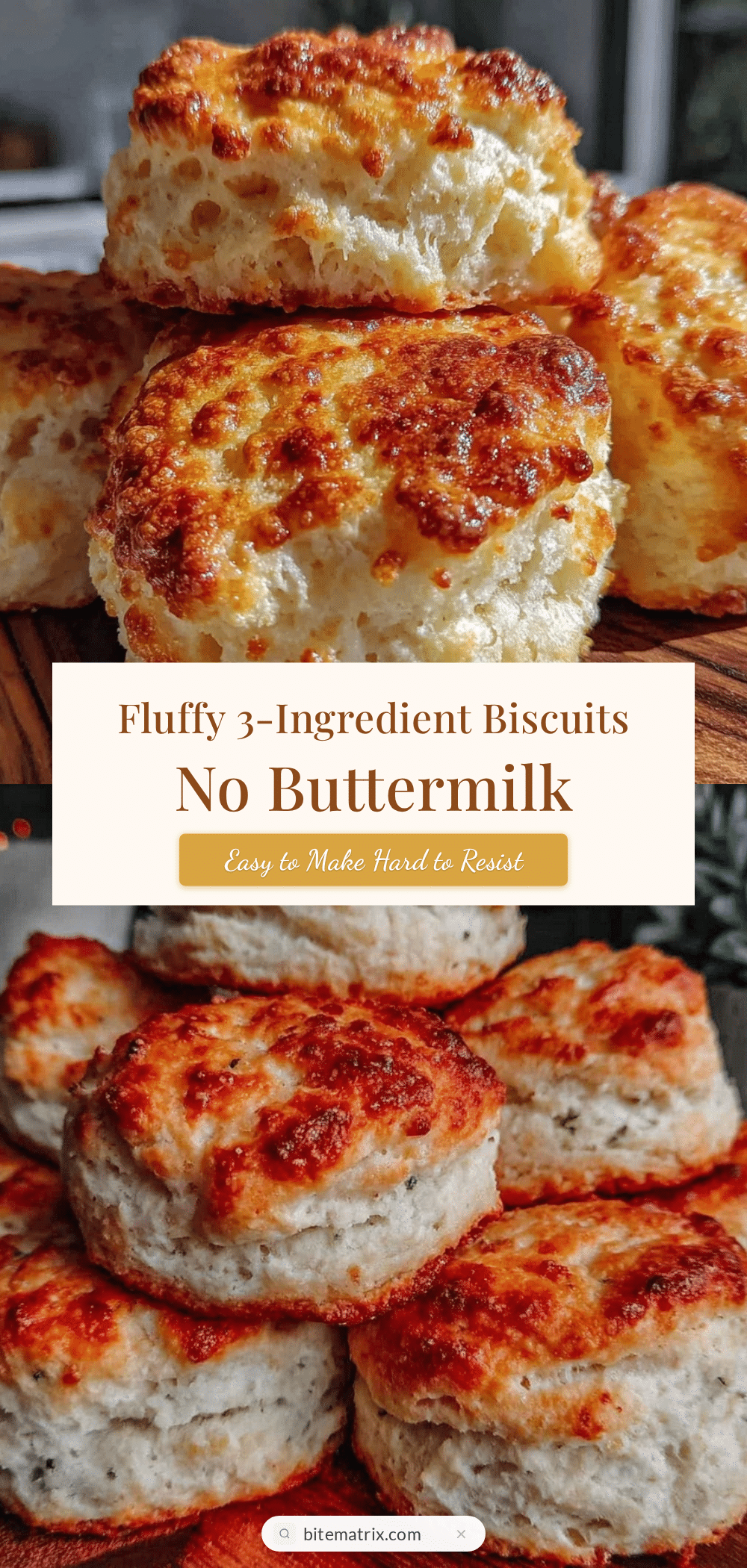
Quick Fluffy 3-Ingredient Biscuits Without Buttermilk

A simple and quick biscuit recipe using only three ingredients—self-rising flour, baking powder, and whole milk—that yields fluffy, tender biscuits without the need for buttermilk.
- Prep Time: 5 minutes
- Cook Time: 15 minutes
- Total Time: 20 minutes
- Yield: 8 biscuits 1x
- Category: Breakfast, Side Dish
- Cuisine: American
Ingredients
- 2 cups (240 grams) self-rising flour
- 1 teaspoon baking powder
- 3/4 cup (180 ml) whole milk
Instructions
- Preheat your oven to 425°F (220°C).
- In a mixing bowl, whisk together 2 cups (240g) of self-rising flour and 1 teaspoon of baking powder.
- Pour in 3/4 cup (180ml) of whole milk. Stir gently with a fork or your hand until the dough just comes together. It should be slightly sticky but not overly wet. If it feels too dry, add a splash more milk, a tablespoon at a time.
- Turn the dough onto a floured surface. Lightly flour your countertop and gently fold the dough over itself 3 to 4 times to create layers without over-kneading.
- Pat the dough to about 1-inch (2.5 cm) thickness. Use a biscuit cutter or a glass dipped in flour to cut out rounds. Press straight down for the best rise.
- Arrange biscuits on a baking sheet about an inch apart. For softer sides, place them close so they touch; for crispier edges, space them out.
- Bake for 12-15 minutes until biscuits puff up and develop a light golden top.
- Cool slightly on a wire rack for 5 minutes before serving.
Notes
Do not overwork the dough to keep biscuits fluffy. Use cold milk if possible to slow gluten formation. Cut biscuits straight down without twisting to ensure proper rise. For extra buttery biscuits, brush tops with melted butter after baking. You can add herbs, cheese, or sugar for variations. Store biscuits in an airtight container at room temperature for up to 2 days or freeze for up to 3 months.
Nutrition
- Serving Size: 1 biscuit
- Calories: 150
- Sugar: 2
- Sodium: 350
- Fat: 2.5
- Saturated Fat: 1.5
- Carbohydrates: 28
- Fiber: 1
- Protein: 4
Keywords: biscuits, quick biscuits, 3-ingredient biscuits, no buttermilk biscuits, fluffy biscuits, easy homemade biscuits