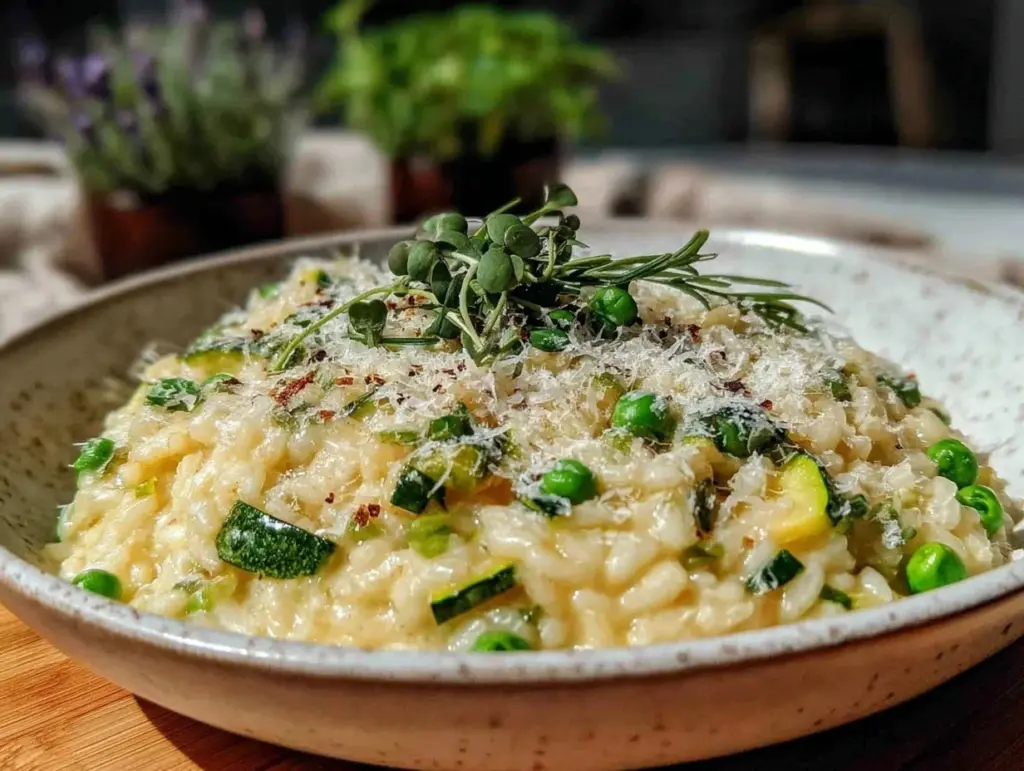
“You know, I wasn’t planning on making risotto that day,” I confessed to my friend while stirring the bubbling pot. It was a chilly Thursday afternoon, and I had just returned from the farmer’s market with an overflowing bag of fresh spring veggies. Honestly, I was aiming for a quick pasta dish, but then my neighbor, Mr. Jenkins, who’s more known for his gardening tips than cooking, popped by with a handful of herby wisdom and a suggestion: “Try a risotto with these fresh herbs and veggies; it’s a real springtime treat.” I laughed it off at first—risotto seemed complicated and time-consuming—but curiosity got the best of me.
The kitchen quickly turned into a bit of a mess—flour dusted the counter, my cat knocked over a measuring cup, and I forgot to set the timer twice. Yet, the sizzle of onions hitting the pan and the creamy texture forming as I slowly ladled in broth was oddly calming. The real surprise came when I took that first bite. The risotto was creamy, fresh, and bursting with delicate spring flavors, thanks to the combo of peas, asparagus, and a fragrant mix of fresh herbs. It was the kind of dish that makes you pause, close your eyes, and savor every spoonful.
Maybe you’ve been there—craving something comforting yet light, something that feels like spring itself on your plate. This creamy spring vegetable risotto with fresh herbs is that dish. It stuck with me, not just because it’s delicious but because it’s simple enough to whip up on a busy weeknight and special enough to bring to any table.
Why You’ll Love This Creamy Spring Vegetable Risotto with Fresh Herbs
After trying countless risotto recipes, I can say this one truly stands out. Here’s why it’s become a staple in my kitchen:
- Quick & Easy: Ready in under 45 minutes, it fits perfectly into busy evenings without feeling rushed.
- Simple Ingredients: No exotic items here—just fresh spring veggies, basic pantry staples, and herbs you might already have.
- Perfect for Spring Gatherings: Light yet satisfying, it brightens up any brunch or dinner with friends.
- Crowd-Pleaser: Even picky eaters tend to love its creamy texture and fresh vegetable flavors.
- Unbelievably Delicious: The balance of creamy arborio rice and crisp, vibrant vegetables is just right.
What makes this risotto different? Well, I blend cottage cheese into the mix for an ultra-smooth creaminess without adding heavy cream, and I toss in a handful of fresh herbs at the end to brighten the whole dish. It’s not your typical heavy risotto—it’s fresher, lighter, but still soul-soothing. Plus, no one can resist that slight pop of asparagus and the gentle sweetness of peas.
Honestly, this recipe is one that makes you want to slow down, savor the moment, and maybe even invite a neighbor over to share the goodness.
What Ingredients You Will Need
This recipe uses simple, wholesome ingredients to deliver bold flavor and satisfying texture without the fuss. Most of these are pantry staples or fresh spring finds that are easy to source or substitute.
- Arborio rice: 1 ½ cups (300 g), the key for creamy risotto texture
- Vegetable broth: 5 cups (1.2 liters), kept warm for gradual absorption
- Unsalted butter: 2 tablespoons (30 g), for richness
- Extra virgin olive oil: 2 tablespoons (30 ml), for sautéing
- Yellow onion: 1 small, finely chopped (adds sweetness and depth)
- Garlic cloves: 2, minced (fresh is best for aroma)
- Fresh asparagus: 1 bunch (about 1 cup chopped) (cut into 1-inch pieces)
- Fresh or frozen peas: 1 cup (150 g) (adds pop of sweetness)
- Cottage cheese: ½ cup (120 g), blended smooth (substitute with ricotta for creamier texture)
- Parmesan cheese: ½ cup grated (50 g), for that savory umami kick
- Fresh herbs: 2 tablespoons chopped parsley, 1 tablespoon chives, 1 teaspoon tarragon (adds brightness)
- Salt and pepper: To taste
- Fresh lemon juice: 1 tablespoon (optional, for a touch of acidity)
Tip: I usually grab arborio rice from [Lundberg Farms], which gives a nice creamy finish. When fresh peas aren’t available, frozen ones work just fine—just toss them in a bit earlier to thaw. If you want a dairy-free version, swap butter for coconut oil and use a plant-based cheese alternative.
Equipment Needed
- Large heavy-bottomed skillet or sauté pan: Essential for even cooking and stirring without burning.
- Medium saucepan: To keep the vegetable broth warm—this helps the rice cook evenly.
- Wooden spoon or silicone spatula: For stirring gently without mashing the rice.
- Measuring cups and spoons: For accuracy, especially important in risotto.
- Blender or food processor: To smooth out the cottage cheese before adding.
If you don’t have a blender, whisk the cottage cheese vigorously or mash it with a fork until creamy—it won’t be perfectly smooth, but it still works. I personally prefer a heavy-bottomed pan because it prevents scorching, but a good-quality non-stick skillet can also do the trick. Keeping your tools in good shape makes the process smoother—don’t forget to clean your wooden spoon well to avoid lingering flavors!
Preparation Method
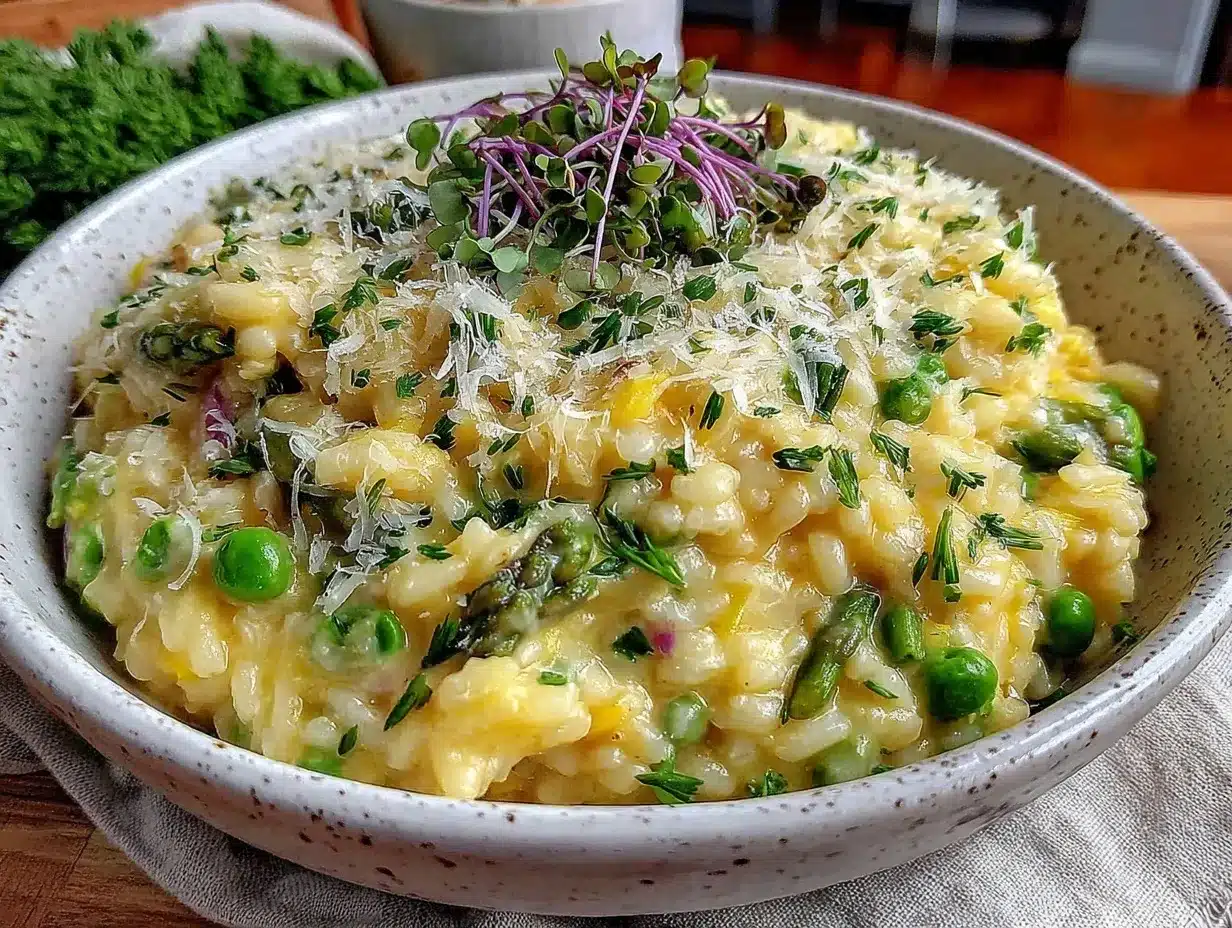
- Prepare the broth: In a medium saucepan, heat 5 cups (1.2 liters) of vegetable broth over low heat. Keep it warm on a gentle simmer throughout cooking. (10 minutes)
- Prep the cottage cheese: Blend ½ cup (120 g) cottage cheese until smooth and creamy. Set aside. (5 minutes)
- Sauté aromatics: In a large skillet, heat 2 tablespoons (30 ml) olive oil and 2 tablespoons (30 g) unsalted butter over medium heat. Add 1 finely chopped small onion and sauté until translucent, about 5 minutes. Add 2 minced garlic cloves and cook for another 1 minute until fragrant. (6 minutes)
- Toast the rice: Add 1 ½ cups (300 g) arborio rice to the pan. Stir to coat each grain with the buttery mixture. Cook for 2 minutes until the edges look translucent but the center is still opaque. This toasting step locks in a nutty flavor. (2 minutes)
- Add broth gradually: Pour in ½ cup (120 ml) of the warm broth, stirring constantly. Wait until the liquid is mostly absorbed before adding the next ½ cup. Repeat this process, stirring gently but frequently, until the rice is tender but still slightly firm in the center—this takes about 18-20 minutes. (20 minutes)
- Add vegetables: When you’re halfway through the broth addition, stir in 1 cup chopped fresh asparagus and 1 cup fresh or frozen peas. The vegetables will cook perfectly during the remaining broth absorption. (10 minutes)
- Finish with creamy additions: Once the rice is cooked and creamy, reduce heat to low. Stir in the blended cottage cheese and ½ cup (50 g) grated Parmesan cheese. Mix until smooth and creamy. Season with salt and pepper to taste. (3-4 minutes)
- Add fresh herbs and lemon juice: Fold in 2 tablespoons chopped parsley, 1 tablespoon chopped chives, 1 teaspoon tarragon, and 1 tablespoon fresh lemon juice for a fresh pop. (1 minute)
- Serve immediately: Risotto waits for no one! Spoon onto plates and serve hot for the best creaminess and flavor.
Note: If your risotto feels too thick, stir in a splash of warm broth or water before serving. Watch closely to avoid overcooking—the rice can get mushy fast if left too long.
Cooking Tips & Techniques
Risotto might seem intimidating, but a few tricks make all the difference. First, patience is your friend. Adding broth gradually and stirring often helps release the rice’s natural starches for that signature creaminess. Don’t rush this step, even if you’re tempted to multitask elsewhere—trust me, the payoff is worth it.
When sautéing onions and garlic, low and slow is key to developing sweetness without burning. Also, always keep your broth warm; cold broth shocks the rice and slows cooking.
One common mistake is over-stirring or stirring too aggressively. Gentle, frequent stirring prevents sticking without breaking the grains. I learned this the hard way when my first attempt turned gummy because I stirred nonstop with too much enthusiasm!
Adding vegetables halfway through cooking ensures they stay tender-crisp and vibrant. Don’t forget the fresh herbs at the end—they bring a brightness that balances the creamy richness.
Finally, serve risotto as soon as it’s done. It will thicken as it cools, so if you need to hold it briefly, stir in a bit of warm broth to loosen it up.
Variations & Adaptations
- Vegan Version: Use vegetable broth, replace butter with olive oil, swap cottage cheese and Parmesan for vegan cheese or nutritional yeast. Add a splash of coconut cream for richness.
- Seasonal Twist: In summer, swap asparagus and peas for fresh zucchini ribbons and cherry tomatoes. In autumn, try roasted mushrooms and sage instead.
- Protein Boost: Stir in cooked shrimp or grilled chicken for a heartier meal without sacrificing creaminess.
- Gluten-Free: Risotto is naturally gluten-free when using pure arborio rice and gluten-free broth—just double-check your broth ingredients.
- Herb Swap: Experiment with basil and mint for a fresh Mediterranean touch, or dill and chervil for a French-inspired flavor.
Personally, I once added a splash of white wine during the broth additions, which gave the dish a subtle depth I really enjoyed. Just be sure to cook off the alcohol before adding the veggies.
Serving & Storage Suggestions
Serve this creamy spring vegetable risotto hot, straight from the pan, ideally on warm plates to keep it cozy longer. Garnish with an extra sprinkle of Parmesan and a few fresh herb leaves for a pretty finish. It pairs beautifully with a crisp green salad and a glass of chilled Sauvignon Blanc or sparkling water with lemon.
Leftovers can be stored in an airtight container in the refrigerator for up to 2 days. The risotto will thicken as it chills—when reheating, add a splash of broth or water and gently warm on the stove or microwave, stirring occasionally to restore creaminess.
Flavors develop nicely after sitting overnight, so if you’re planning ahead, the next-day taste is often even better.
Nutritional Information & Benefits
This recipe offers a balanced mix of carbohydrates from arborio rice, fiber and vitamins from fresh vegetables, and protein from cottage cheese and Parmesan. One serving (about 1 cup) provides roughly 350-400 calories, with 10-12 grams of protein and 5-7 grams of fiber.
Asparagus and peas are rich in antioxidants, vitamins A and C, and folate, supporting immune health and digestion. The fresh herbs add additional micronutrients and a fresh aroma that can stimulate appetite.
This spring vegetable risotto is naturally gluten-free and can be adapted for dairy-free diets, making it accessible for many dietary needs.
Conclusion
This creamy spring vegetable risotto with fresh herbs is more than just a meal; it’s a comforting ritual that welcomes the season’s best produce to your table. Its creamy texture and vibrant flavors make it a satisfying dish that’s surprisingly simple to prepare. I love how it turns a handful of humble ingredients into something special, perfect for both everyday dinners and casual entertaining.
Feel free to tweak the herbs, veggies, or cheese to suit your taste—this recipe welcomes your personal touch. I hope you give it a try and find the same joy in making and eating it as I do.
If you make this risotto, I’d love to hear how it turned out or what variations you tried. Share your cooking stories and tips in the comments below—let’s keep the kitchen conversation going!
Remember, cooking is about experimenting, enjoying the process, and savoring every bite. Happy cooking!
Frequently Asked Questions
Can I make risotto ahead of time?
Risotto is best served fresh, but you can prepare it a day ahead. Store refrigerated and reheat gently with a splash of broth to bring back its creamy texture.
What if I don’t have arborio rice?
Arborio rice is ideal for risotto because of its starch content, but other short-grain rices like carnaroli or vialone nano work well too. Avoid long-grain rice as it won’t yield the same creaminess.
Can I use frozen vegetables?
Yes, frozen peas and asparagus can be used. Add them a bit earlier during cooking so they thaw and cook through properly.
How do I know when the risotto is done?
The rice should be tender with a slight bite in the center (al dente) and the mixture should be creamy, not dry or soupy.
Is there a substitute for cottage cheese?
You can use ricotta cheese or mascarpone for creaminess. For a dairy-free option, try blended silken tofu or a plant-based cream cheese alternative.
Pin This Recipe!
Creamy Spring Vegetable Risotto with Fresh Herbs

A creamy, fresh risotto bursting with spring vegetables and herbs, perfect for a comforting yet light meal. This easy homemade recipe uses simple ingredients and blends cottage cheese for smooth creaminess without heavy cream.
- Prep Time: 15 minutes
- Cook Time: 30 minutes
- Total Time: 45 minutes
- Yield: 4 servings 1x
- Category: Main Course
- Cuisine: Italian
Ingredients
- 1 ½ cups (300 g) arborio rice
- 5 cups (1.2 liters) vegetable broth, kept warm
- 2 tablespoons (30 g) unsalted butter
- 2 tablespoons (30 ml) extra virgin olive oil
- 1 small yellow onion, finely chopped
- 2 garlic cloves, minced
- 1 bunch fresh asparagus (about 1 cup chopped), cut into 1-inch pieces
- 1 cup (150 g) fresh or frozen peas
- ½ cup (120 g) cottage cheese, blended smooth
- ½ cup (50 g) grated Parmesan cheese
- 2 tablespoons chopped fresh parsley
- 1 tablespoon chopped fresh chives
- 1 teaspoon tarragon
- Salt and pepper to taste
- 1 tablespoon fresh lemon juice (optional)
Instructions
- In a medium saucepan, heat 5 cups (1.2 liters) of vegetable broth over low heat and keep warm on a gentle simmer.
- Blend ½ cup (120 g) cottage cheese until smooth and creamy. Set aside.
- In a large skillet, heat 2 tablespoons olive oil and 2 tablespoons unsalted butter over medium heat. Add the finely chopped onion and sauté until translucent, about 5 minutes.
- Add minced garlic and cook for another 1 minute until fragrant.
- Add arborio rice to the pan and stir to coat each grain with the buttery mixture. Cook for 2 minutes until edges look translucent but center is still opaque.
- Pour in ½ cup (120 ml) warm broth, stirring constantly. Wait until liquid is mostly absorbed before adding the next ½ cup. Repeat this process, stirring gently but frequently, until rice is tender but still slightly firm in the center, about 18-20 minutes.
- When halfway through broth addition, stir in chopped asparagus and peas. Cook vegetables during remaining broth absorption, about 10 minutes.
- Once rice is cooked and creamy, reduce heat to low. Stir in blended cottage cheese and grated Parmesan cheese. Mix until smooth and creamy. Season with salt and pepper to taste.
- Fold in chopped parsley, chives, tarragon, and fresh lemon juice for brightness.
- Serve immediately while hot for best creaminess and flavor.
Notes
Keep broth warm to ensure even cooking. Stir gently and frequently to release rice starches for creaminess. Add vegetables halfway through broth addition to keep them tender-crisp. Serve immediately as risotto thickens as it cools; loosen with warm broth if needed. For dairy-free version, substitute butter with coconut oil and use plant-based cheese alternatives.
Nutrition
- Serving Size: About 1 cup per serv
- Calories: 375
- Sugar: 5
- Sodium: 600
- Fat: 12
- Saturated Fat: 5
- Carbohydrates: 50
- Fiber: 6
- Protein: 11
Keywords: risotto, spring vegetables, creamy risotto, fresh herbs, easy risotto recipe, vegetarian, gluten-free, homemade risotto