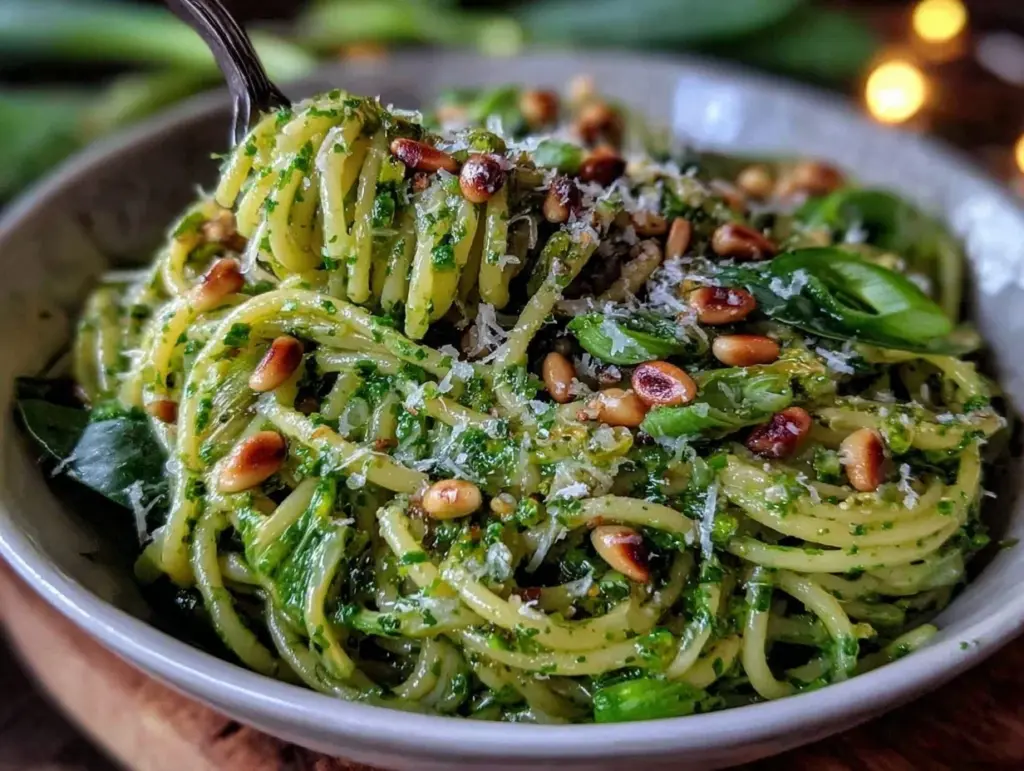
“You have to try this—it’s like pesto but somehow fresher,” my neighbor said one afternoon, thrusting a jar of vivid green sauce into my hands. Honestly, I was skeptical. Garlic scapes? I’d seen those curly green stalks at the farmer’s market but never thought to toss them into pasta. Yet, something about the brightness of the sauce pulled me in.
I remember the first time I stirred that tangy, garlicky pesto with al dente pasta and sprinkled it with crunchy pine nuts. The aroma filled my small kitchen, a mix of fresh herbs and toasted nuttiness that felt like spring had arrived early. That day, it wasn’t just a meal—it felt like a reset from my usual stale pasta routines.
Since then, I’ve found myself making this fresh garlic scape pesto pasta with crunchy pine nuts over and over—sometimes as a quick solo dinner, other times for unexpected guests. Each time, it surprises me how those simple ingredients come together into something so vibrant and satisfying. It’s not fancy, and that’s the charm. It’s honest, quick, and honestly, you know that moment when a dish just feels right? That’s this recipe.
What stuck with me is how the garlic scapes lend a milder, almost sweet garlic punch—without the usual sharpness. It’s a reminder that sometimes the best meals come from trying something a little different, even if it’s just a green stalk you weren’t quite sure about. If you’re curious about a fresh twist on pesto pasta, this recipe will feel like a little surprise you didn’t see coming, but won’t want to live without.
Why You’ll Love This Fresh Garlic Scape Pesto Pasta Recipe with Crunchy Pine Nuts
After testing this fresh garlic scape pesto pasta recipe many times, I can say it’s a keeper for several solid reasons. It’s truly a blend of simple ingredients and big flavors that come together quickly, perfect for when you don’t want to fuss but still crave something special.
- Quick & Easy: Ready in about 25 minutes, this recipe fits neatly into busy weeknights or when you need a last-minute dinner that doesn’t disappoint.
- Simple Ingredients: The star, fresh garlic scapes, pairs beautifully with pantry staples like pine nuts and olive oil. No need for special trips to the store.
- Perfect for Seasonal Cooking: Garlic scapes only come around for a short window each spring, so this recipe celebrates that fleeting freshness and seasonal excitement.
- Crowd-Pleaser: I’ve served this to friends who usually shy away from anything “green” on their plate, and it’s always met with enthusiastic approval.
- Unbelievably Delicious: The creamy, herbaceous pesto combined with the satisfying crunch of toasted pine nuts creates a texture and flavor combo that feels both comforting and refreshing.
What makes this fresh garlic scape pesto pasta stand apart is the pesto’s unique twist: instead of the usual basil-heavy version, the garlic scapes bring a gentle garlicky sweetness that’s less overpowering but deeply flavorful. Plus, toasting the pine nuts until golden adds a crunch that makes each bite interesting. I even prefer blending the pesto just enough to leave a bit of texture, which keeps it lively on the tongue.
Honestly, this pasta dish doesn’t feel like a compromise between quick and tasty—it feels like the best of both worlds. It’s the kind of recipe you keep coming back to, not just because it’s easy, but because it genuinely tastes like spring on a plate.
What Ingredients You Will Need
This fresh garlic scape pesto pasta recipe uses straightforward, fresh ingredients that come together to create bold, satisfying flavor without fuss. Most are pantry staples, but that fresh garlic scape really makes the dish sing.
- Fresh Garlic Scapes: About 1 cup, chopped (roughly 5-6 scapes). These provide the mellow garlic punch that defines the pesto. If you can’t find scapes, mild green garlic or young garlic shoots work as substitutes.
- Pine Nuts: 1/3 cup, toasted. Look for raw pine nuts to toast yourself for the best crunch and flavor. I usually grab Fattoria Ranaldi pine nuts—they toast beautifully without bitterness.
- Parmesan Cheese: 1/2 cup grated, preferably Parmigiano-Reggiano for its nutty, sharp flavor.
- Extra Virgin Olive Oil: About 1/2 cup. A good quality oil makes a noticeable difference here; I recommend cold-pressed for freshness.
- Lemon Juice: 1 tablespoon freshly squeezed to brighten the pesto.
- Salt and Freshly Ground Black Pepper: To taste, balancing the flavors.
- Spaghetti or Linguine: 12 ounces (340 grams). Use your favorite pasta shape; long pasta works best to coat evenly with the pesto.
- Optional – Garlic Clove: One small clove for an extra garlic kick if you like it bolder.
These ingredients combine to create a vibrant sauce that’s both herbaceous and creamy. The pine nuts add a toasty crunch, which contrasts so nicely with the smoothness of the pesto. If you want to experiment, swapping pine nuts with walnuts or almonds works well too, though pine nuts have that classic, buttery flavor that’s tough to beat.
Equipment Needed
- Food Processor or Blender: Essential for pulsing the garlic scapes and pine nuts into a fine, but not completely smooth, pesto. I’ve tried hand-chopping before, but the texture isn’t quite the same.
- Large Pot: For boiling the pasta. A pot with plenty of water helps prevent the noodles from sticking.
- Colander: To drain the pasta efficiently.
- Large Mixing Bowl: For tossing the pasta with pesto, so every strand gets coated.
- Skillet or Small Pan: For toasting pine nuts. Keep a close eye on them—they burn fast!
- Measuring Cups and Spoons: For accuracy, especially with oil and lemon juice.
If you don’t have a food processor, a sturdy blender works, though you might need to scrape down the sides a couple of times. For the pine nuts, a dry skillet on medium-low heat is best; trust me, I’ve scorched more than one batch by turning up the heat too high.
Preparation Method
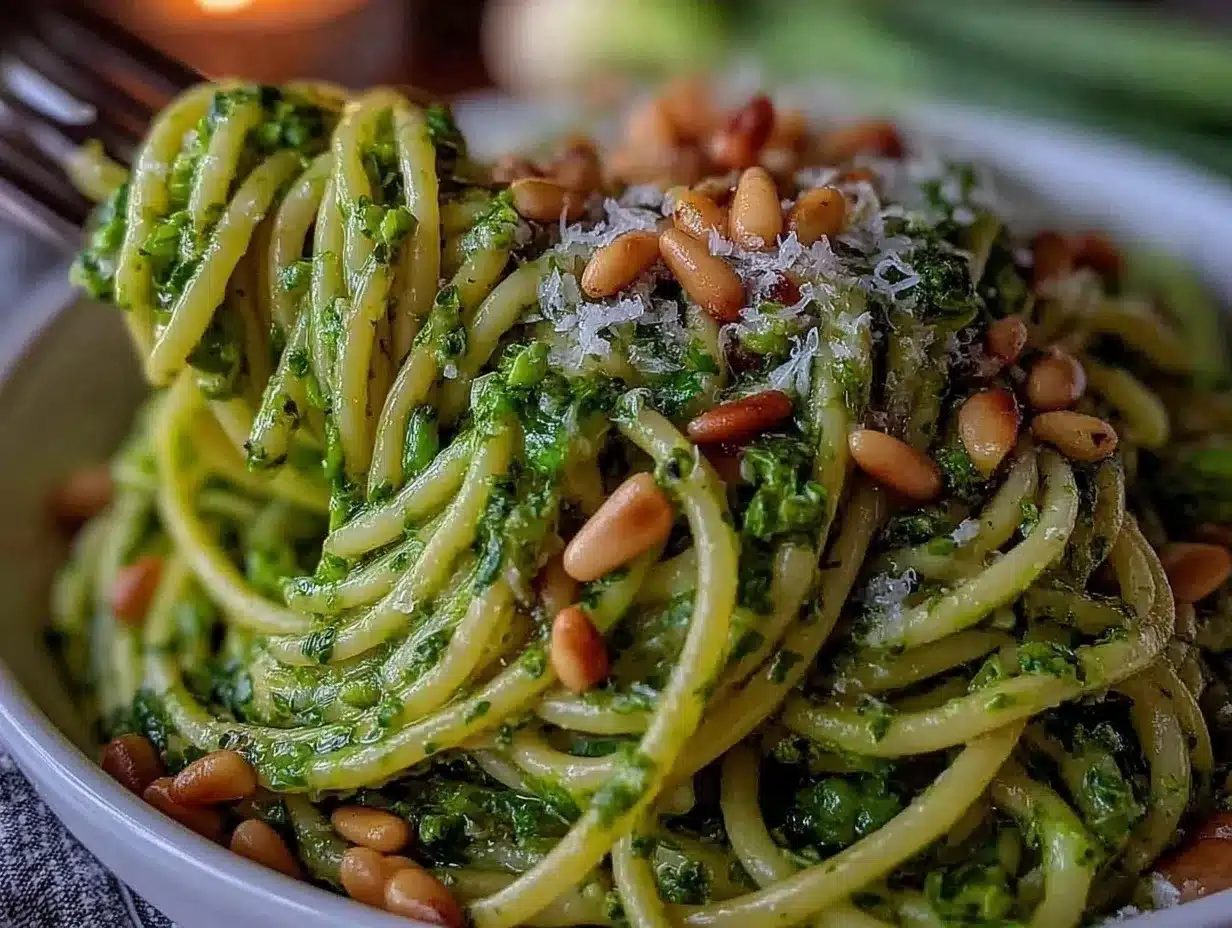
- Toast the Pine Nuts: Place 1/3 cup pine nuts in a dry skillet over medium-low heat. Stir frequently for about 3-5 minutes until golden and fragrant. Transfer immediately to a plate to cool—pine nuts can burn quickly.
- Prepare the Pasta: Bring a large pot of salted water to a boil. Add 12 ounces (340 g) of spaghetti or linguine and cook according to package instructions until al dente (usually 8-10 minutes). Reserve about 1 cup of pasta water before draining.
- Make the Pesto: In a food processor, combine chopped garlic scapes (about 1 cup), cooled pine nuts, 1/2 cup grated Parmesan, and optional garlic clove if using. Pulse a few times to roughly chop.
- Add Lemon Juice and Olive Oil: With the machine running, drizzle in 1/2 cup extra virgin olive oil until the mixture forms a coarse but creamy pesto. Stop and scrape down the sides as needed. Season with salt and pepper to taste.
- Toss Pasta with Pesto: Transfer drained pasta to a large mixing bowl. Add the pesto and about 1/4 cup reserved pasta water to loosen the sauce. Toss gently but thoroughly until pasta is evenly coated. Add more pasta water if needed for a silky texture.
- Serve: Plate the pasta and sprinkle with a few extra toasted pine nuts and a little more grated Parmesan if desired. A light drizzle of olive oil on top adds a nice finishing touch.
Keep in mind the pesto is best served fresh but can be kept in the fridge for up to 2 days. When tossing the pasta, the reserved pasta water is your secret weapon—it helps the sauce cling perfectly without feeling oily or heavy.
Cooking Tips & Techniques
One of the trickiest parts of this fresh garlic scape pesto pasta is getting the pine nuts toasted just right. I learned the hard way that medium-low heat and constant stirring are key—burnt pine nuts will turn the whole dish bitter, no matter how good the pesto is.
Also, when blending the pesto, don’t overdo it. You want some texture left from the scapes and nuts, so pulse in short bursts rather than running the processor continuously. This gives the pesto a rustic feel that works well with the pasta’s chewiness.
I’ve found that reserving pasta water is essential. It’s a classic Italian trick that helps emulsify the sauce, making it cling to the noodles like a creamy coating rather than just sitting on top. Add it little by little until the texture feels just right.
And if your pantry is anything like mine, you’ll appreciate that this pesto keeps well in the fridge for a couple of days. Just bring it back to room temperature and add a splash of olive oil if it seems a bit thick before tossing with pasta.
Variations & Adaptations
- Nut-Free Version: Swap pine nuts with toasted pumpkin seeds or sunflower seeds for a similar crunch without nuts. The flavor will be different but still delicious.
- Vegan Adaptation: Omit the Parmesan or replace it with nutritional yeast for a cheesy flavor without dairy.
- Seasonal Twist: In summer, try mixing fresh basil leaves with the garlic scapes in the pesto for a more traditional yet still fresh taste.
- Different Pasta Shapes: Short pasta like fusilli or penne can work well, especially if you want to pack this into a portable lunch container.
- Extra Protein: Toss in some cooked grilled chicken or shrimp. This pairs nicely with the fresh herbaceous notes—reminds me of the juicy grilled corn on the cob with chili lime butter I made alongside one summer night.
I once added a handful of arugula to the pesto for a peppery kick—turned out surprisingly good and gave the sauce a deeper green color. Feel free to experiment based on what you have on hand or your mood.
Serving & Storage Suggestions
This fresh garlic scape pesto pasta is best served warm or at room temperature. The flavors bloom beautifully when the pasta isn’t piping hot, allowing the pesto’s brightness to come through.
For a simple meal, serve it with a crisp green salad or a refreshing side like the fresh creamy cucumber dill salad. A chilled white wine or sparkling water with lemon pairs delightfully as well.
To store leftovers, place the pasta in an airtight container and refrigerate for up to 2 days. The pesto may thicken or separate a bit; stirring in a splash of olive oil or a little warm water before reheating in a skillet can help revive the texture.
Reheat gently on the stovetop or enjoy cold for a quick, flavorful pasta salad. The pine nuts stay crunchy longer if you add them fresh on top after reheating.
Flavors tend to meld and mellow overnight, so if you can wait, leftovers often taste even better the next day. Just be sure to give it a good toss and maybe a squeeze of fresh lemon before serving again.
Nutritional Information & Benefits
This fresh garlic scape pesto pasta is not only tasty but offers some nice nutritional perks. Garlic scapes are rich in vitamins A and C and add antioxidants without extra calories. Pine nuts contribute healthy fats and protein, making this more than just a carb-heavy dish.
A typical serving (about 1½ cups) contains roughly 450-500 calories, with a good balance of fats from olive oil and pine nuts, moderate protein from Parmesan, and satisfying carbs from pasta. Using whole-grain or legume-based pasta can boost fiber and protein further.
It’s naturally gluten-containing unless you swap in gluten-free pasta. For dairy-free eaters, leaving out the Parmesan or using a plant-based alternative keeps it accessible.
From my experience, this dish hits the spot when you want something light but fulfilling—comfort food that doesn’t weigh you down.
Conclusion
Fresh garlic scape pesto pasta with crunchy pine nuts has become one of those meals I turn to when I want simple, fresh, and flavorful without any fuss. It’s easy to make, uses a handful of ingredients, and delivers a punch that feels both comforting and new.
Whether you’re new to garlic scapes or a longtime fan, this recipe offers a fun way to enjoy their unique flavor. Don’t hesitate to tweak the pesto or swap nuts to suit your pantry or preferences—it’s forgiving and flexible like that.
Personally, I love this dish because it reminds me how a small seasonal ingredient can transform everyday pasta into something special. If you try it, I’d love to hear what you think or how you made it your own. Happy cooking!
Frequently Asked Questions About Fresh Garlic Scape Pesto Pasta
What are garlic scapes, and where can I find them?
Garlic scapes are the curly green shoots that grow from garlic bulbs in spring. They have a milder garlic flavor and can often be found at farmers markets or specialty grocery stores during their short season.
Can I use frozen garlic scapes for this pesto?
Fresh is best for flavor and texture, but if you have frozen scapes, thaw them completely and drain any excess moisture before blending. The pesto might be a bit less vibrant.
How long does fresh garlic scape pesto last in the fridge?
Stored in an airtight container, the pesto keeps for about 2-3 days. Adding a thin layer of olive oil on top helps prevent discoloration.
Can I make this pesto ahead of time?
Yes, you can prepare the pesto a day in advance. Keep it refrigerated and bring it to room temperature before tossing with pasta.
Are there good alternatives to pine nuts?
Absolutely! Toasted walnuts, almonds, or even pumpkin seeds can be used if you’re allergic or don’t have pine nuts on hand. Each offers a slightly different flavor and crunch.
Pin This Recipe!
Fresh Garlic Scape Pesto Pasta Recipe with Crunchy Pine Nuts
A vibrant and fresh twist on traditional pesto pasta using garlic scapes and toasted pine nuts, delivering a creamy, herbaceous sauce with a satisfying crunch. Quick and easy to prepare, perfect for spring and seasonal cooking.
- Prep Time: 10 minutes
- Cook Time: 15 minutes
- Total Time: 25 minutes
- Yield: 4 servings 1x
- Category: Main Course
- Cuisine: Italian
Ingredients
- 1 cup fresh garlic scapes, chopped (about 5–6 scapes)
- 1/3 cup pine nuts, toasted
- 1/2 cup grated Parmesan cheese (preferably Parmigiano-Reggiano)
- 1/2 cup extra virgin olive oil
- 1 tablespoon freshly squeezed lemon juice
- Salt and freshly ground black pepper, to taste
- 12 ounces spaghetti or linguine
- Optional: 1 small garlic clove for extra garlic flavor
Instructions
- Toast the pine nuts in a dry skillet over medium-low heat, stirring frequently for 3-5 minutes until golden and fragrant. Transfer to a plate to cool.
- Bring a large pot of salted water to a boil. Cook 12 ounces of spaghetti or linguine according to package instructions until al dente (8-10 minutes). Reserve 1 cup of pasta water before draining.
- In a food processor, combine chopped garlic scapes, cooled pine nuts, grated Parmesan, and optional garlic clove. Pulse a few times to roughly chop.
- With the processor running, drizzle in the olive oil until the mixture forms a coarse but creamy pesto. Scrape down the sides as needed. Season with salt and pepper to taste.
- Transfer drained pasta to a large mixing bowl. Add the pesto and about 1/4 cup reserved pasta water to loosen the sauce. Toss gently until pasta is evenly coated. Add more pasta water if needed for desired texture.
- Serve the pasta topped with extra toasted pine nuts and additional grated Parmesan if desired. Drizzle with a little olive oil for finishing.
Notes
Toast pine nuts over medium-low heat and stir constantly to avoid burning. Pulse pesto ingredients in short bursts to keep some texture. Reserve pasta water to help emulsify the sauce and achieve a silky coating. Pesto keeps in the fridge for up to 2 days; bring to room temperature and add olive oil before using again.
Nutrition
- Serving Size: About 1 1/2 cups
- Calories: 475
- Sugar: 2
- Sodium: 350
- Fat: 35
- Saturated Fat: 6
- Carbohydrates: 35
- Fiber: 3
- Protein: 12
Keywords: garlic scape pesto, pesto pasta, pine nuts, fresh pesto, spring recipe, easy pasta, quick dinner, vegetarian pasta