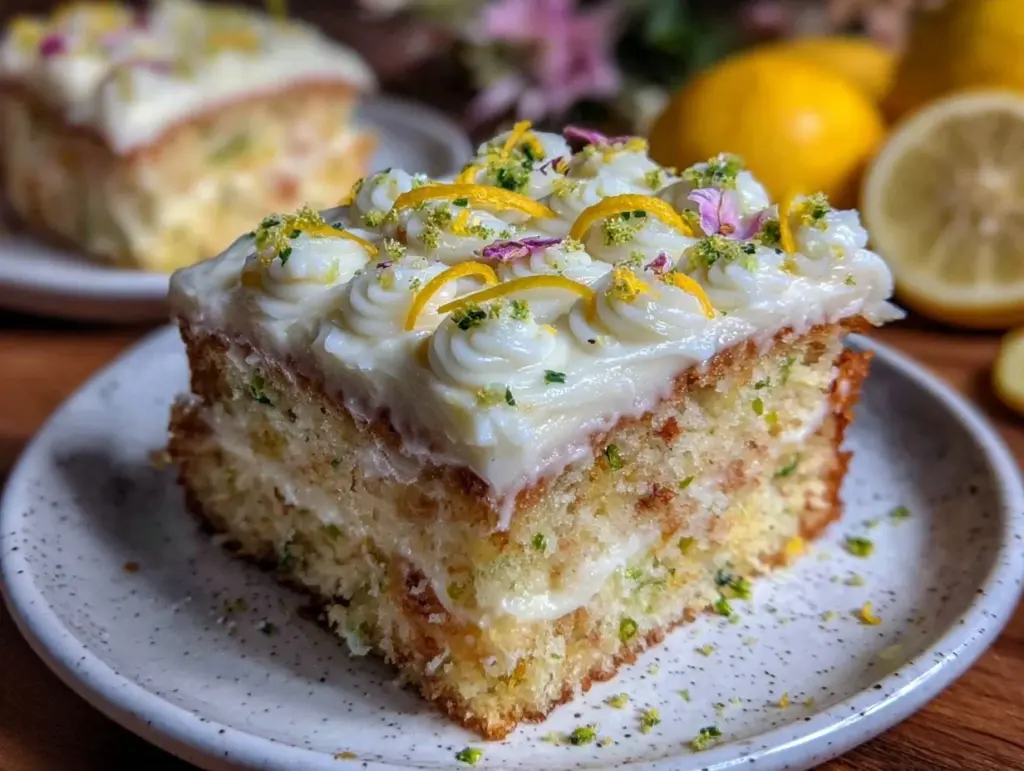
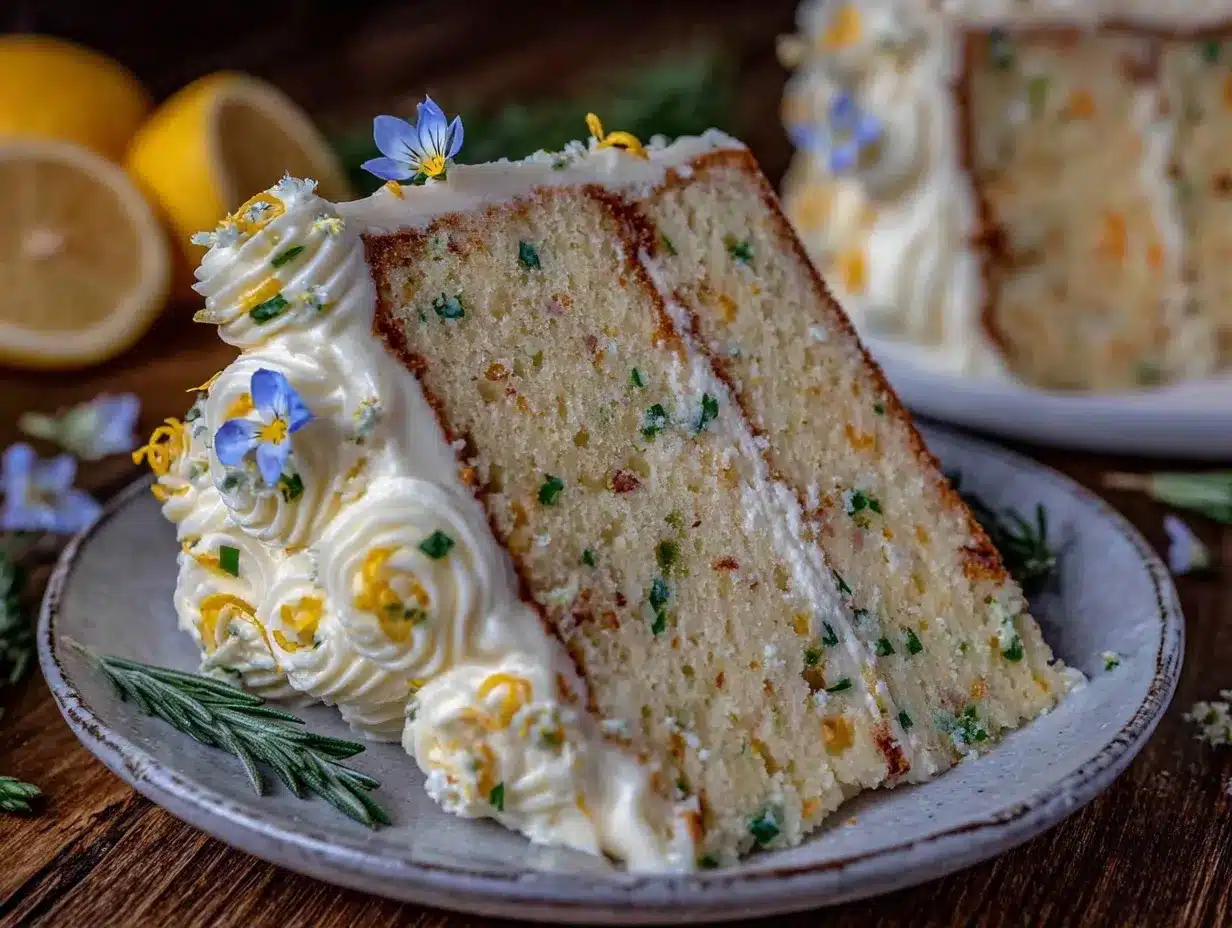
“The summer I turned thirty, my neighbor Mrs. Thompson—who’s more known for her green thumb than her baking—handed me a slice of cake that stopped me mid-bite. Honestly, I wasn’t expecting much from her little backyard gathering, but that moist lemon elderflower cake with creamy frosting was something else. The delicate floral notes paired with the zing of lemon were unlike any cake I’d ever tasted, and I had to know how she made it. She chuckled, saying it was a family secret, but after a few shared afternoons with her in the kitchen (and a cracked mixing bowl incident I won’t forget), I finally nailed the recipe. Maybe you’ve been there—caught off guard by a flavor that just lingers, makes you close your eyes, and wish you had another slice (or three). This cake has stuck with me ever since, and I keep making it for Sunday teas and special occasions alike.”
Why You’ll Love This Recipe
This moist lemon elderflower cake recipe isn’t just a pretty face with a zesty twist—it’s been tested, tweaked, and approved through many kitchen trials (some more chaotic than others). Whether you’re a seasoned baker or just someone who loves a simple, flavorful cake, this one hits all the marks.
- Quick & Easy: Comes together in about 45 minutes, making it perfect for impromptu gatherings or when you suddenly crave something sweet and fresh.
- Simple Ingredients: Most are pantry staples, plus a hint of elderflower cordial that adds a unique floral touch without fuss.
- Perfect for: Afternoon teas, birthday celebrations, or brunches where a light but indulgent cake is just right.
- Crowd-Pleaser: Kids and adults alike keep going back for seconds, even if they don’t know exactly what elderflower is!
- Unbelievably Delicious: The balance between tart lemon and sweet elderflower, wrapped in creamy frosting, makes every bite a little celebration.
This isn’t your average lemon cake. The secret lies in gently folding in buttermilk for that melt-in-your-mouth texture and using a touch of elderflower cordial to give it a subtle floral lift. The creamy frosting is not too sweet, keeping the whole thing fresh and light. Honestly, it’s the kind of recipe you’ll want to keep in your back pocket for when you want something impressive without the stress.
What Ingredients You Will Need
For this recipe, I stick to simple, wholesome ingredients that work together to create that moist, flavorful cake with a hint of floral charm. Most of these are pantry staples—easy to find and easy to swap if needed.
- For the Cake Batter:
- All-purpose flour – 2 ½ cups (310 g) (I prefer King Arthur for consistent results)
- Baking powder – 2 ½ teaspoons
- Baking soda – ½ teaspoon
- Salt – ½ teaspoon
- Unsalted butter – ¾ cup (170 g), softened (room temperature is key!)
- Granulated sugar – 1 ¾ cups (350 g)
- Large eggs – 3, room temperature
- Buttermilk – 1 cup (240 ml) (adds moisture and tenderness; you can make your own by adding 1 tablespoon lemon juice to regular milk)
- Lemon zest – from 2 medium lemons (for that fresh zing)
- Lemon juice – ¼ cup (60 ml), freshly squeezed
- Elderflower cordial – 3 tablespoons (look for a quality brand like Belvoir; it’s the magic touch here)
- For the Creamy Frosting:
- Cream cheese – 8 oz (227 g), softened (I like Philadelphia for smooth texture)
- Unsalted butter – ½ cup (113 g), softened
- Powdered sugar – 3 cups (360 g), sifted
- Lemon juice – 2 tablespoons (adds brightness without overpowering)
- Vanilla extract – 1 teaspoon
- Optional Garnishes:
- Thin lemon slices or twists
- Fresh edible flowers (like pansies or violets)
If you don’t have elderflower cordial, you can skip it or try a splash of orange blossom water, but the original flavor is definitely worth hunting down. For a dairy-free option, almond milk and dairy-free cream cheese work well—though the texture changes a bit.
Equipment Needed
- Two 8-inch (20 cm) round cake pans (nonstick or lined with parchment paper for easy removal)
- Electric mixer (handheld or stand mixer) for creaming butter and sugar smoothly
- Mixing bowls (medium and large)
- Measuring cups and spoons (accurate measurement is key for baking)
- Zester or microplane for lemon zest
- Citrus juicer (optional, but handy for squeezing fresh lemon juice)
- Spatula for folding ingredients gently
- Cooling rack to let cakes rest before frosting
- Offset spatula or butter knife for spreading frosting evenly
If you don’t have cake pans, you can use a 9×13-inch (23×33 cm) pan but expect a denser cake and adjust baking time accordingly. A hand mixer works fine, but a stand mixer helps keep your hands free (trust me, it’s a lifesaver when frosting is involved). For cleaning, I recommend wiping your mixer beaters right after use to prevent sticky buildup.
Preparation Method
- Preheat your oven to 350°F (175°C). Grease and flour your two 8-inch pans or line with parchment paper. This step ensures a smooth release later.
- Mix the dry ingredients: In a medium bowl, whisk together 2 ½ cups (310 g) flour, 2 ½ teaspoons baking powder, ½ teaspoon baking soda, and ½ teaspoon salt. Set aside.
- Cream butter and sugar: In a large bowl, beat ¾ cup (170 g) softened butter with 1 ¾ cups (350 g) sugar using an electric mixer on medium speed until light and fluffy—about 3-4 minutes. You’ll notice the mixture lighten in color and puff up a bit.
- Add eggs one at a time: Crack in 3 large eggs, beating well after each addition. This prevents curdling and helps create a smooth batter. If the mixture looks a little curdled, don’t worry—that’s normal at this stage.
- Incorporate lemon zest and juice: Stir in the zest from 2 lemons and ¼ cup (60 ml) fresh lemon juice along with 3 tablespoons of elderflower cordial. This combination gives the batter a bright, aromatic base.
- Alternate adding dry ingredients and buttermilk: Begin by adding one-third of the dry mixture to the wet ingredients, then half the buttermilk (1 cup/240 ml), mixing gently after each addition. Repeat until all is combined, but don’t overmix—the batter should be smooth but slightly thick. Overmixing can make the cake tough.
- Pour batter evenly: Divide the batter between the two prepared pans. Tap the pans gently on the counter to release any air bubbles.
- Bake: Place pans in the oven and bake for 30-35 minutes, or until a toothpick inserted in the center comes out clean. Check at the 30-minute mark to avoid overbaking—your cake should be golden with a slight spring when pressed.
- Cool: Let the cakes cool in the pans for about 10 minutes, then transfer to a wire rack to cool completely. Frosting a warm cake will melt the frosting, and nobody wants that mess.
- Prepare frosting: Beat 8 oz (227 g) softened cream cheese and ½ cup (113 g) softened butter together until smooth and creamy. Gradually add 3 cups (360 g) powdered sugar, 2 tablespoons lemon juice, and 1 teaspoon vanilla extract. Beat until fluffy and spreadable. If frosting feels too thick, add a splash of milk to loosen.
- Assemble: Place one cake layer on your serving plate. Spread a generous layer of frosting on top, then gently place the second cake layer over it. Frost the top and sides evenly.
- Garnish: Add thin lemon slices or edible flowers for a pretty finish, if desired. Chill the cake for at least 30 minutes before serving to set the frosting.
Quick tip: If your frosting is too soft to spread, pop it in the fridge for 10-15 minutes. Also, when zesting lemons, avoid the white pith—it’s bitter and can mess with the cake’s delicate balance.
Cooking Tips & Techniques
Getting this moist lemon elderflower cake just right is all about attention to detail and a few tricks I’ve picked up along the way. For starters, always use room temperature ingredients. Cold eggs or butter can cause the batter to curdle, and trust me, the texture suffers.
When mixing, don’t rush folding in the dry ingredients and buttermilk. Folding gently prevents the batter from deflating, which keeps the cake tender and airy. Also, measuring flour correctly makes a big difference—too much flour can dry out the cake. I recommend spooning the flour lightly into your measuring cup and leveling it off with a knife rather than scooping directly.
One mistake I made early on was skipping the step of cooling the cake layers before frosting. That led to frosting melting and a runny disaster. Patience here really pays off.
Another tip: if you want extra lemon punch, add a simple lemon syrup brush after baking. Mix equal parts sugar and lemon juice, warm it slightly, and gently brush onto the warm cake layers before frosting. It adds moisture and zesty flavor without sogginess.
Finally, multitasking helps—start cooling your cake right away while whipping the frosting. This way, you won’t be stuck waiting around, and your kitchen workflow feels smoother.
Variations & Adaptations
- Gluten-Free Version: Substitute all-purpose flour with a gluten-free blend that includes xanthan gum for structure. Be sure to check baking powder is gluten-free too.
- Dairy-Free Alternative: Use almond or oat milk instead of buttermilk (add 1 tablespoon vinegar to mimic acidity). Swap cream cheese and butter for dairy-free versions like coconut cream cheese and vegan butter.
- Herbal Twist: Add finely chopped fresh thyme or rosemary to the batter for an earthy note that pairs beautifully with lemon and elderflower.
- Summer Berry Addition: Fold in fresh raspberries or blueberries gently into the batter before baking for bursts of juicy sweetness.
- Personal Variation: I once tried a honey-based frosting instead of cream cheese, mixing cream cheese with a bit of honey and lemon zest—it was lighter and added a lovely floral sweetness that complemented the elderflower perfectly.
Serving & Storage Suggestions
This lemon elderflower cake tastes best served slightly chilled or at room temperature. The creamy frosting holds its shape nicely but softens pleasantly as it sits. I usually slice it thinly because the flavor is rich and bright, and a little goes a long way.
Pair it with a cup of Earl Grey tea or a crisp glass of sparkling wine for a lovely afternoon treat. For a brunch spread, it works well alongside fresh fruit and light salads.
Store leftover cake covered in the refrigerator for up to 4 days. To keep it moist, wrap it tightly or store in an airtight container. You can freeze individual slices wrapped well in plastic wrap and foil for up to 3 months—just thaw overnight in the fridge.
Reheat slices gently in the microwave for 10-15 seconds if you want that just-baked warmth, but honestly, this cake is delightful cold too. The flavors mellow and blend beautifully after a day or two, so sometimes I prefer waiting a bit before eating it all.
Nutritional Information & Benefits
A slice of this moist lemon elderflower cake (about 1/12 of the cake) contains approximately:
| Calories | 320 kcal |
|---|---|
| Fat | 16 g |
| Carbohydrates | 40 g |
| Protein | 4 g |
| Sugar | 28 g |
Key ingredients like lemon provide vitamin C and antioxidants, while elderflower has been traditionally used for its soothing properties. Using buttermilk adds calcium and contributes to a tender crumb. This recipe is naturally gluten-containing but can be adapted for gluten-free diets. It’s not low-calorie but makes a lovely occasional treat you can feel good about sharing with friends and family.
Conclusion
If you’re looking for a cake that’s moist, flavorful, and a little unexpected with its elderflower twist, this recipe is a winner. It’s simple enough to whip up on a weekday afternoon but special enough to impress at celebrations. I love how the lemon’s brightness and floral notes feel like a breath of fresh air, and the creamy frosting ties it all together perfectly.
Don’t hesitate to tweak the amount of elderflower or lemon to suit your taste—you might find your own perfect balance. And hey, if you try it and add a personal spin, I’d love to hear about it in the comments below. Sharing recipes is what keeps this fun and delicious!
So grab your mixing bowl and give this moist lemon elderflower cake a go. You might just find your new favorite dessert.
FAQs
Can I make this cake ahead of time?
Yes! You can bake the cake layers a day ahead and keep them wrapped tightly at room temperature. Frost the cake the next day for best freshness.
What if I don’t have elderflower cordial?
You can omit it or substitute with a splash of orange blossom water, but the unique floral flavor won’t be quite the same.
How do I know when the cake is done?
Insert a toothpick in the center; if it comes out clean or with a few moist crumbs, the cake is ready. Avoid overbaking to keep it moist.
Can I use frozen lemon juice or zest?
Fresh lemon juice and zest are best for brightness, but frozen can work in a pinch. Just use the same quantities.
Is this cake suitable for kids?
Absolutely! It’s not too sweet and has a fresh flavor that kids usually enjoy. Just be mindful of any allergies to ingredients like eggs or dairy.
Pin This Recipe!
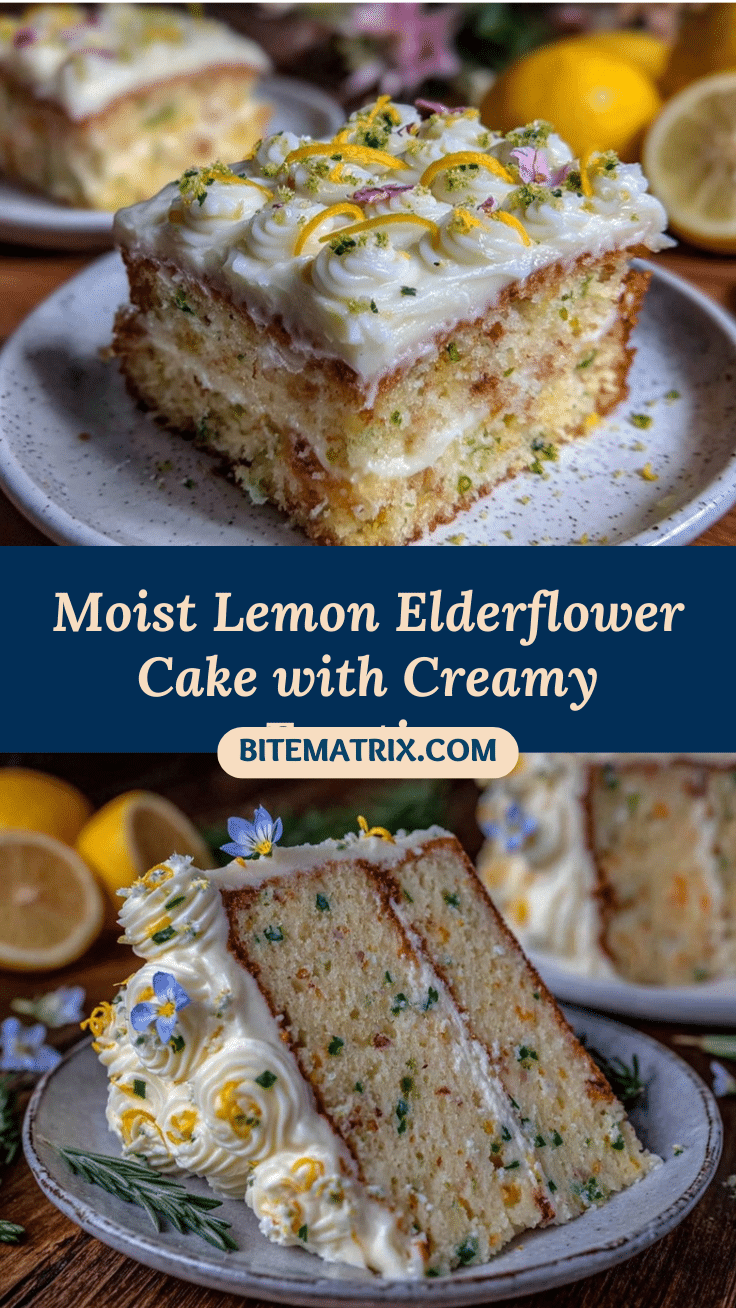
Moist Lemon Elderflower Cake

A moist and flavorful lemon elderflower cake with a creamy frosting, perfect for afternoon teas and special occasions. The cake features a subtle floral lift from elderflower cordial and a fresh zing from lemon.
- Prep Time: 15 minutes
- Cook Time: 35 minutes
- Total Time: 50 minutes
- Yield: 12 servings 1x
- Category: Dessert
- Cuisine: American
Ingredients
- 2 ½ cups (310 g) all-purpose flour
- 2 ½ teaspoons baking powder
- ½ teaspoon baking soda
- ½ teaspoon salt
- ¾ cup (170 g) unsalted butter, softened
- 1 ¾ cups (350 g) granulated sugar
- 3 large eggs, room temperature
- 1 cup (240 ml) buttermilk
- Zest of 2 medium lemons
- ¼ cup (60 ml) freshly squeezed lemon juice
- 3 tablespoons elderflower cordial
- 8 oz (227 g) cream cheese, softened
- ½ cup (113 g) unsalted butter, softened
- 3 cups (360 g) powdered sugar, sifted
- 2 tablespoons lemon juice
- 1 teaspoon vanilla extract
- Optional garnishes: thin lemon slices or twists, fresh edible flowers (like pansies or violets)
Instructions
- Preheat oven to 350°F (175°C). Grease and flour two 8-inch round cake pans or line with parchment paper.
- In a medium bowl, whisk together flour, baking powder, baking soda, and salt. Set aside.
- In a large bowl, beat softened butter and granulated sugar with an electric mixer on medium speed until light and fluffy, about 3-4 minutes.
- Add eggs one at a time, beating well after each addition.
- Stir in lemon zest, lemon juice, and elderflower cordial.
- Alternate adding the dry ingredients and buttermilk to the wet mixture, beginning and ending with the dry ingredients. Fold gently until combined; do not overmix.
- Divide batter evenly between prepared pans and tap pans gently to release air bubbles.
- Bake for 30-35 minutes or until a toothpick inserted in the center comes out clean.
- Cool cakes in pans for 10 minutes, then transfer to a wire rack to cool completely.
- For the frosting, beat cream cheese and softened butter until smooth and creamy.
- Gradually add powdered sugar, lemon juice, and vanilla extract, beating until fluffy and spreadable. Add a splash of milk if frosting is too thick.
- Place one cake layer on a serving plate, spread frosting on top, then place the second layer over it.
- Frost the top and sides evenly.
- Garnish with thin lemon slices or edible flowers if desired.
- Chill the cake for at least 30 minutes before serving to set the frosting.
Notes
Use room temperature ingredients for best results. Avoid overmixing the batter to keep the cake tender. Cool cake layers completely before frosting to prevent melting. For extra lemon flavor, brush warm cake layers with lemon syrup before frosting. If frosting is too soft, chill for 10-15 minutes before spreading.
Nutrition
- Serving Size: 1 slice (1/12 of cak
- Calories: 320
- Sugar: 28
- Fat: 16
- Carbohydrates: 40
- Protein: 4
Keywords: lemon cake, elderflower cake, moist cake, creamy frosting, easy lemon cake, floral cake, homemade frosting