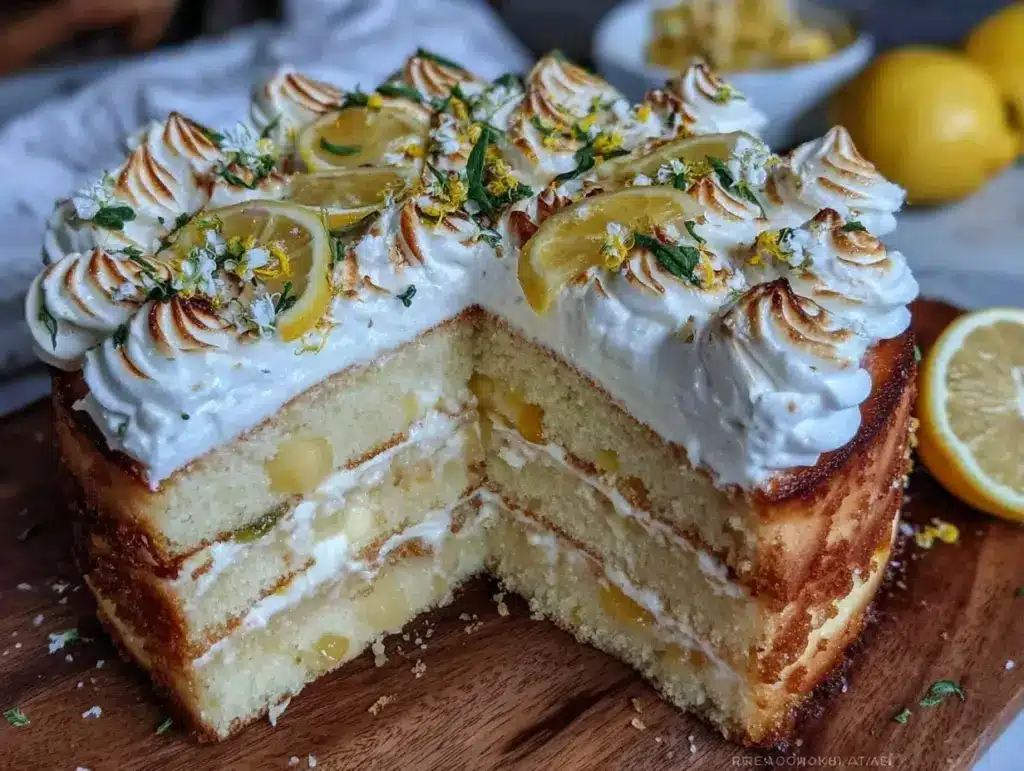
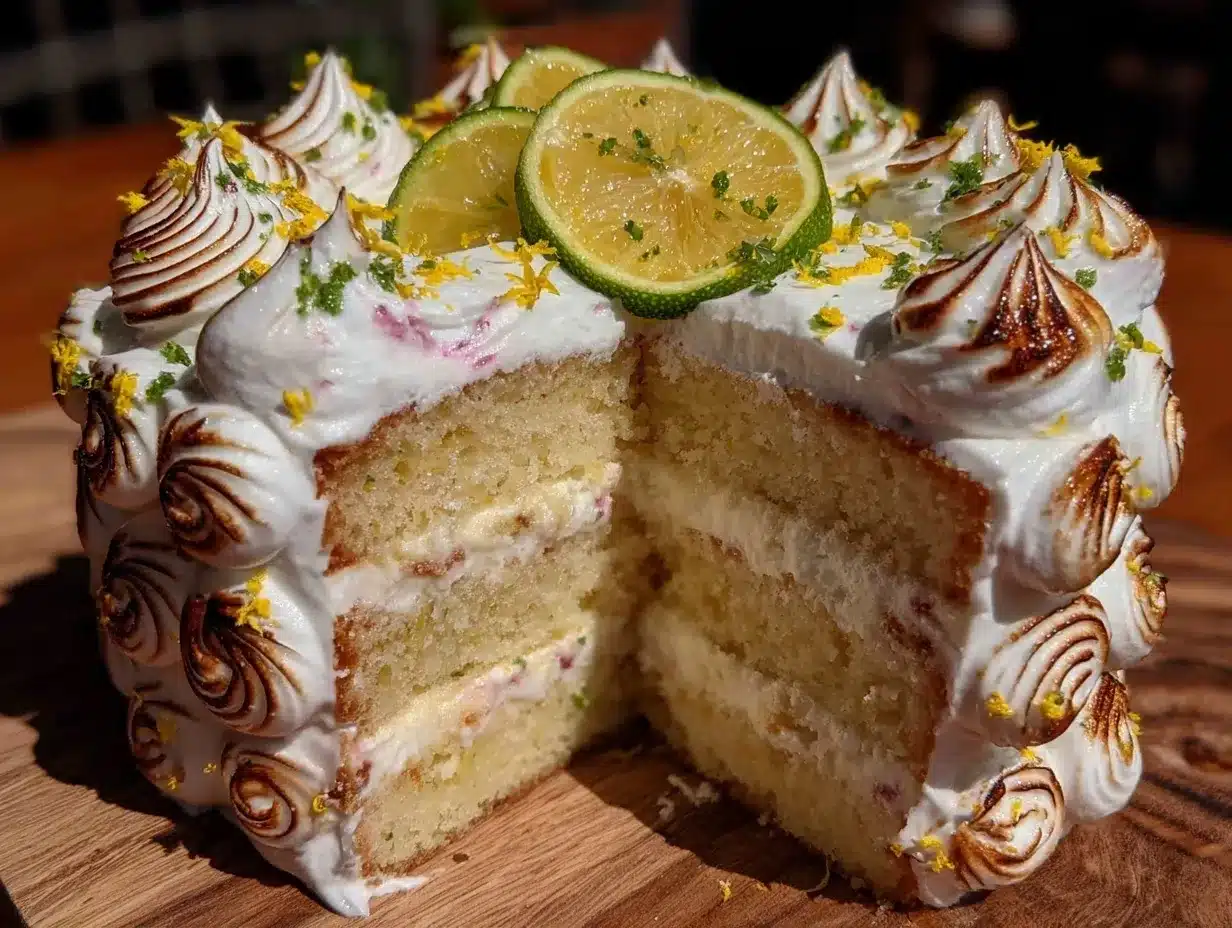
“You really think lemon and elderflower can play nice in a cake?” That was my skeptical friend’s exact question as I pulled this Perfect Lemon Elderflower Layer Cake with Swiss Meringue Frosting out of the oven. Honestly, I get it—combining lemon’s bright zing with the delicate floral notes of elderflower sounds a little out there, like a dessert version of springtime in a glass. But here’s the thing: this cake was born from one of those rare moments when I had a craving that felt too specific to ignore. I was rummaging through my pantry, looking for something light yet special to bring to a small gathering, and the elderflower cordial caught my eye. I thought, why not? Let’s give it a whirl.
After a few trials, tweaking the balance between tart lemon and sweet, fragrant elderflower, plus mastering the silky Swiss meringue frosting, this cake quickly became a quiet obsession. I found myself making it more than once in a week—not something I usually do with layered cakes, which can be a bit fussy. The texture is tender but sturdy enough to hold those layers, and the frosting isn’t overly sweet, which is a refreshing change from your typical buttercream overload.
What stuck with me most was how this cake feels like a soft whisper of spring, even when the weather outside is dreary. It’s a perfect little celebration for any moment that calls for something sweet but not heavy. I’m sharing this recipe now because it’s one I trust, one that’s been tested with friends and family who all asked for the recipe afterward. It’s the kind of cake that makes you pause and appreciate the simple joys—like a quiet afternoon, a warm kitchen, and the gentle hum of conversation.
Why You’ll Love This Recipe
From my kitchen to yours, this Perfect Lemon Elderflower Layer Cake with Swiss Meringue Frosting has a charm that’s hard to put into words but easy to taste. Having tested this recipe multiple times, I can say it genuinely shines for several reasons:
- Quick & Easy: The cake layers come together smoothly within about 45 minutes of hands-on time, making it manageable even on a busy afternoon.
- Simple Ingredients: Most components are pantry staples or easy to find, with elderflower cordial being the only slightly fancy ingredient (but worth the small splurge).
- Perfect for Celebrations: Whether it’s a birthday, bridal shower, or just a weekend treat, this cake feels fancy without being intimidating.
- Crowd-Pleaser: Every time I’ve served it, from casual friends to those picky about sweets, it’s been a hit.
- Unbelievably Delicious: The Swiss meringue frosting balances the tartness with a velvety, light sweetness that melts in your mouth.
What sets this recipe apart is the careful balance of flavors and technique. Instead of a heavy buttercream, the Swiss meringue frosting adds a smooth, glossy finish that’s stable but never cloying. Plus, blending elderflower cordial right into the batter and frosting creates this subtle floral note you don’t get from just zest or extracts. Honestly, it’s the kind of cake that has you closing your eyes on the first bite, savoring that gentle lemon-elderflower dance. And if you want to keep things a bit lighter after a meal, this recipe feels just right—like a soft handshake rather than a full-on bear hug.
What Ingredients You Will Need
This recipe uses simple, wholesome ingredients to bring out bold but gentle flavors, without any complicated or hard-to-find items. Most are pantry staples, with the elderflower cordial adding that special twist. Here’s what you’ll gather:
- For the Cake Layers:
- All-purpose flour, sifted (about 2 ½ cups / 315 g) – I prefer Gold Medal for consistent texture
- Baking powder (2 ½ tsp) – fresh is key for a good rise
- Fine sea salt (½ tsp)
- Unsalted butter, softened (1 cup / 227 g)
- Granulated sugar (2 cups / 400 g)
- Large eggs, room temperature (4) – they help with structure and moisture
- Whole milk, room temperature (¾ cup / 180 ml) – adds tenderness
- Pure vanilla extract (1 tsp)
- Lemon zest (2 tbsp from about 2 lemons) – fresh zest is a must for brightness
- Fresh lemon juice (¼ cup / 60 ml)
- Elderflower cordial (¼ cup / 60 ml) – I like Belvoir for its natural floral notes, but any quality brand works
- For the Swiss Meringue Frosting:
- Large egg whites (4), room temperature – these make the frosting light and airy
- Granulated sugar (1 cup / 200 g)
- Unsalted butter, softened and cut into cubes (1 ½ cups / 340 g)
- Pure vanilla extract (1 tsp)
- Lemon zest (1 tbsp)
- Elderflower cordial (2 tbsp) – to echo the cake’s floral note in the frosting
Substitutions: If you want a dairy-free version, swap the butter for a high-quality vegan butter and use almond or oat milk instead of whole milk. For gluten-free, almond flour alone won’t work here, but a 1:1 gluten-free baking flour mix can be used with a slight texture difference. The elderflower cordial can be omitted if unavailable, but the cake won’t have that distinct floral charm.
Equipment Needed
- Two 8-inch (20 cm) round cake pans – nonstick or well-greased and parchment-lined
- Electric mixer (stand or hand) – essential for the Swiss meringue frosting’s silky texture
- Heatproof bowl for bain-marie (double boiler) setup – to gently warm egg whites and sugar
- Rubber spatula – for folding batter and smoothing frosting
- Cooling racks – to cool cake layers evenly
- Offset spatula or butter knife – for frosting the cake smoothly
- Microplane or fine grater – to zest lemons
If you don’t have a stand mixer, a hand mixer works fine, though it might take a bit longer to get the meringue stiff peaks. I’ve tried this with a whisk and patience alone (yep, once when my mixer died), but it’s a serious workout! For budget-friendly options, standard metal cake pans and a sturdy mixing bowl will do just fine. Keeping your butter softened but cool is key, so if you have a kitchen thermometer or just a cool spot to rest your butter, it helps.
Preparation Method
- Preheat and Prepare Pans: Set your oven to 350°F (175°C). Grease two 8-inch cake pans and line the bottoms with parchment paper. This makes removing the cakes easier and keeps the layers neat. Tip: I like to dust pans lightly with flour after greasing to prevent any sticking.
- Mix Dry Ingredients: In a medium bowl, whisk together 2 ½ cups (315 g) sifted flour, 2 ½ tsp baking powder, and ½ tsp salt. Set aside. This ensures even rising and prevents clumps.
- Cream Butter and Sugar: Using an electric mixer, beat 1 cup (227 g) softened butter and 2 cups (400 g) sugar on medium speed until light and fluffy, about 4-5 minutes. This step traps air, making the cake tender.
- Add Eggs: Add eggs one at a time, beating well after each addition. This helps with emulsification and structure. Don’t rush this part—it’s worth the patience.
- Incorporate Lemon and Elderflower: Mix in 2 tbsp lemon zest, ¼ cup (60 ml) lemon juice, ¼ cup (60 ml) elderflower cordial, and 1 tsp vanilla extract. The batter will smell amazing here—bright, fresh, and floral.
- Alternate Adding Dry Ingredients and Milk: On low speed, add the flour mixture in three additions, alternating with ¾ cup (180 ml) whole milk, beginning and ending with the dry ingredients. Mix until just combined—overmixing can make the cake tough.
- Divide and Bake: Pour the batter evenly into the prepared pans. Tap the pans gently on the counter to remove air bubbles. Bake for 30-35 minutes, or until a toothpick inserted in the center comes out clean. The tops should spring back lightly when pressed.
- Cool Layers: Let the cakes cool in pans for 10 minutes, then turn them out onto cooling racks to cool completely. This prevents soggy layers.
- Prepare Swiss Meringue Frosting: Combine 4 large egg whites and 1 cup (200 g) sugar in a heatproof bowl over simmering water. Whisk constantly until the sugar dissolves and the mixture reaches about 160°F (70°C). Transfer to a mixer and beat on high until stiff, glossy peaks form and the bowl feels cool to the touch, about 10 minutes.
- Add Butter and Flavor: Gradually add 1 ½ cups (340 g) softened butter, a few cubes at a time, beating well after each addition. The frosting might look curdled at first—keep beating patiently until it smooths out. Mix in 1 tsp vanilla extract, 1 tbsp lemon zest, and 2 tbsp elderflower cordial.
- Assemble the Cake: Level the cakes with a serrated knife if needed. Place one layer on your serving plate, spread a generous amount of frosting on top, then add the second layer. Cover the whole cake with the remaining frosting, smoothing with an offset spatula.
- Chill and Serve: Chill the cake for at least 30 minutes to let the frosting set before slicing. This helps keep those neat layers intact.
If the frosting gets too soft while assembling, pop it in the fridge for 10-15 minutes and then continue. Also, keep your eggs at room temperature before starting—cold eggs can make the meringue tricky.
Cooking Tips & Techniques
Swiss meringue frosting is honestly a game changer but can be a little intimidating. Here’s what I’ve learned:
- Patience is key: When beating the egg whites and sugar, make sure the sugar is fully dissolved to avoid gritty frosting. The mixture should feel smooth between your fingers before you switch to the mixer.
- Temperature matters: If your frosting looks curdled after adding butter, don’t panic. It usually means the butter is too cold or the meringue too warm. Let the bowl sit at room temp or warm it gently with your hands while beating.
- Fresh zest is non-negotiable: It’s what gives the cake its vibrant lemon flavor. I always zest before juicing the lemons to avoid losing those essential oils.
- Even layers make a difference: Leveling the cake layers isn’t just for looks—it helps the cake stack stable and slice cleanly.
- Multitasking: While the cakes bake, prepare the frosting. It’s efficient and keeps everything fresh.
One time, I forgot to line my pans and the cakes stuck terribly. Lesson learned fast! Also, using a quality elderflower cordial really lifts the whole flavor profile—don’t skimp here.
Variations & Adaptations
Feel like switching things up? Here are some ideas that still keep the spirit of the Perfect Lemon Elderflower Layer Cake:
- Berry Twist: Add a layer of fresh raspberries or a raspberry jam swirl between the cake layers for a fruity pop that pairs beautifully with lemon and elderflower.
- Gluten-Free Version: Use a 1:1 gluten-free flour blend in place of all-purpose flour. The texture will be slightly different but still delicious and tender.
- Lightened-Up Frosting: Swap half the butter in the frosting for cream cheese for a tangy, lighter finish.
- Herbal Notes: Add a teaspoon of finely chopped fresh thyme or basil to the frosting for an unexpected herbal aroma that complements elderflower nicely.
- Mini Cakes or Cupcakes: Scale down the batter into cupcake liners for individual servings—great for parties or picnics.
Personally, I once tried swapping the elderflower cordial with rose water, and while it was lovely, it lost that fresh brightness I love here. Also, if you want a simpler finish, try the no-bake strawberry cheesecake cups for a dessert that doesn’t require the frosting finesse but still celebrates fresh flavors.
Serving & Storage Suggestions
This lemon elderflower cake is best served chilled or at room temperature—chilling firms up the frosting just enough to slice neatly without it melting away. I like to let it sit out for about 15 minutes after removing from the fridge before serving, so the layers soften slightly.
For a special touch, garnish with thin lemon slices, edible flowers, or a sprinkle of finely chopped pistachios. It pairs wonderfully with light teas, sparkling elderflower drinks, or even a crisp white wine if you’re feeling fancy.
Store leftover cake covered in the refrigerator for up to 4 days. If you want to freeze it, wrap tightly in plastic wrap and foil, and freeze for up to 1 month. Thaw overnight in the fridge before serving. Keep in mind that the frosting texture changes slightly after freezing but remains delicious.
Flavors tend to develop and mellow a bit after resting overnight, making this cake a lovely make-ahead dessert for gatherings. Just avoid leaving it out at room temperature for too long due to the egg whites in the frosting.
Nutritional Information & Benefits
Each slice (based on 12 servings) roughly contains:
| Calories | 380 kcal |
|---|---|
| Fat | 22 g (mostly from butter) |
| Carbohydrates | 42 g |
| Protein | 4 g |
| Sugar | 30 g |
The lemon zest and juice provide a dose of vitamin C, while elderflower has been traditionally used for its antioxidant properties. Swiss meringue frosting, made mostly of egg whites and butter, is lighter than traditional buttercream but still rich. This cake isn’t exactly a health food (let’s be honest), but it’s a treat you can enjoy in moderation without feeling weighed down. If you need dairy-free or gluten-free options, the ingredient swaps mentioned earlier work well.
Conclusion
This Perfect Lemon Elderflower Layer Cake with Swiss Meringue Frosting has become a quiet favorite in my recipe collection because it strikes that rare balance between elegant flavor and approachable technique. It’s the kind of cake you can make for a special occasion or just because you want to savor something a little different and utterly delightful.
Feel free to tweak the ingredients or frosting based on what you have on hand or your taste preferences. I hope it brings you as much joy—and maybe a few “wow” moments from friends and family—as it has brought me. Now, if you’re looking for another crowd-pleasing recipe that’s a little more savory, you might enjoy my savory beer can chicken with herb butter glaze—perfect for pairing with lighter desserts like this cake.
Thanks for spending this time with me and my lemon elderflower obsession—I can’t wait to hear about how your cake turns out!
FAQs
- Can I make this cake ahead of time? Yes! Bake the layers and prepare the frosting the day before. Assemble and frost the cake the next day for best results.
- Can I use bottled lemon juice instead of fresh? Fresh lemon juice is recommended for the best bright flavor, but in a pinch, bottled lemon juice can work—just use slightly less to avoid bitterness.
- Is elderflower cordial necessary? It adds a unique floral note that defines the cake, but if unavailable, you can omit it or substitute with a teaspoon of elderflower syrup or a small amount of rose water.
- How do I store leftover Swiss meringue frosting? Keep it in an airtight container in the fridge for up to 3 days. Whip it again before using if it has separated.
- Can I freeze the assembled cake? Yes, wrap tightly and freeze for up to one month. Thaw overnight in the fridge before serving.
Pin This Recipe!
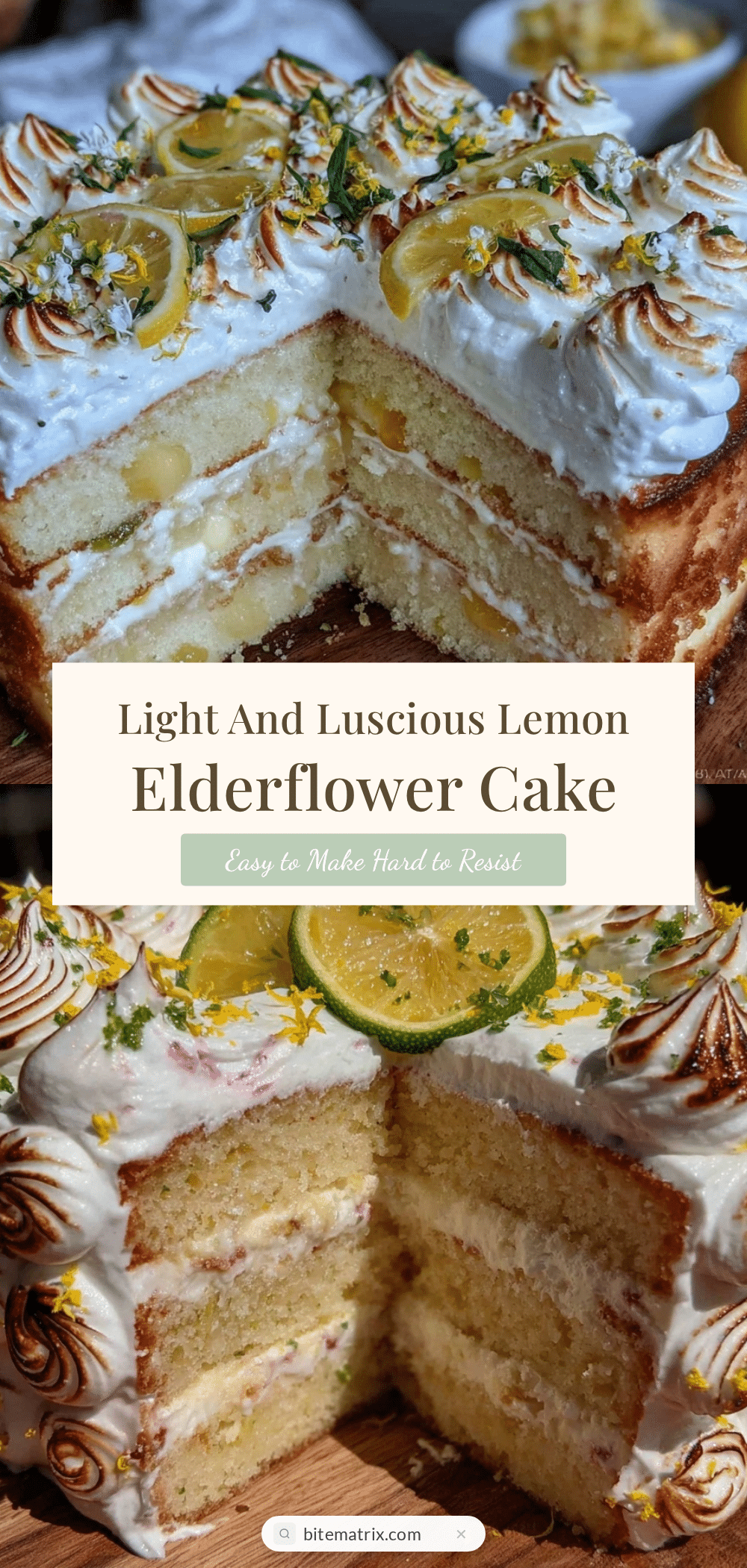
Perfect Lemon Elderflower Layer Cake with Swiss Meringue Frosting

A tender and flavorful lemon elderflower layer cake balanced with a light, silky Swiss meringue frosting. This cake offers a delicate floral note and bright citrus zing, perfect for celebrations or a special treat.
- Prep Time: 45 minutes
- Cook Time: 30-35 minutes
- Total Time: 1 hour 15 minutes
- Yield: 12 servings 1x
- Category: Dessert
- Cuisine: American
Ingredients
- 2 ½ cups (315 g) all-purpose flour, sifted
- 2 ½ tsp baking powder
- ½ tsp fine sea salt
- 1 cup (227 g) unsalted butter, softened
- 2 cups (400 g) granulated sugar
- 4 large eggs, room temperature
- ¾ cup (180 ml) whole milk, room temperature
- 1 tsp pure vanilla extract
- 2 tbsp lemon zest (from about 2 lemons)
- ¼ cup (60 ml) fresh lemon juice
- ¼ cup (60 ml) elderflower cordial
- For the Swiss Meringue Frosting:
- 4 large egg whites, room temperature
- 1 cup (200 g) granulated sugar
- 1 ½ cups (340 g) unsalted butter, softened and cut into cubes
- 1 tsp pure vanilla extract
- 1 tbsp lemon zest
- 2 tbsp elderflower cordial
Instructions
- Preheat oven to 350°F (175°C). Grease two 8-inch round cake pans and line bottoms with parchment paper. Optionally dust pans lightly with flour.
- In a medium bowl, whisk together sifted flour, baking powder, and salt. Set aside.
- Using an electric mixer, beat softened butter and sugar on medium speed until light and fluffy, about 4-5 minutes.
- Add eggs one at a time, beating well after each addition.
- Mix in lemon zest, fresh lemon juice, elderflower cordial, and vanilla extract.
- On low speed, add the flour mixture in three additions, alternating with milk, beginning and ending with dry ingredients. Mix until just combined.
- Divide batter evenly into prepared pans. Tap pans gently to remove air bubbles.
- Bake for 30-35 minutes or until a toothpick inserted in the center comes out clean and tops spring back lightly when pressed.
- Cool cakes in pans for 10 minutes, then turn out onto cooling racks to cool completely.
- To prepare Swiss meringue frosting: Combine egg whites and sugar in a heatproof bowl over simmering water. Whisk constantly until sugar dissolves and mixture reaches 160°F (70°C).
- Transfer to mixer and beat on high until stiff, glossy peaks form and bowl feels cool, about 10 minutes.
- Gradually add softened butter a few cubes at a time, beating well after each addition until smooth. Mix in vanilla extract, lemon zest, and elderflower cordial.
- Level cake layers if needed. Place one layer on serving plate, spread frosting generously, add second layer, then cover entire cake with remaining frosting, smoothing with an offset spatula.
- Chill cake for at least 30 minutes to set frosting before slicing.
Notes
If frosting gets too soft while assembling, chill for 10-15 minutes and continue. Keep eggs at room temperature before starting for best meringue results. Fresh lemon zest is essential for vibrant flavor. Use quality elderflower cordial for best floral notes. Butter should be softened but cool to avoid curdling frosting. For dairy-free, substitute vegan butter and plant milk; for gluten-free, use 1:1 gluten-free flour blend.
Nutrition
- Serving Size: 1 slice (1/12 of cak
- Calories: 380
- Sugar: 30
- Fat: 22
- Carbohydrates: 42
- Protein: 4
Keywords: lemon cake, elderflower cake, Swiss meringue frosting, layered cake, spring dessert, floral cake, homemade cake